Daily Pulse #55 | Aug 4 Tuesday Edition | Google DeepMind unveils Gemini Robotics 2 with whole-body AI control — 'the Android of robots'; Zhiyuan races toward a Hong Kong IPO at a valuation on par with Unitree; UBTECH's U1 tops 13,000 preorders ahead of a C-end delivery test
🎯 Tuesday Briefing (Aug 4)
The week’s theme is a race on two fronts — brains and scale. Google DeepMind released Gemini Robotics 2, which drives legs, torso, arms and fingers under a single policy, with Apptronik’s Apollo 2 demoing tie-tying and bulb-changing chores; Chinese media call it “the Android of robots.” On the domestic front, Zhiyuan (AGIBOT) is reportedly headed for a Hong Kong listing as early as August at a cornerstone valuation of RMB 36.3-43.3 billion, on par with Unitree’s RMB 42 billion. UBTECH’s U1 has surpassed 13,000 preorders ahead of a September 16 delivery test. Automakers are entering a third wave of “robot-making”: Leapmotor set up a precision-manufacturing firm backed by RMB 210 million, while XPeng’s IRON began small-batch trial production. And on form factor, Fei-Fei Li cautions that the human body is not the optimal solution for any specific task.
• 🤖 Google DeepMind’s Gemini Robotics 2 — whole-body control under one policy, one model checkpoint across three robot embodiments, dubbed “the Android of robots” • 🏦 Zhiyuan races to a HK IPO — cornerstone valuation of RMB 36.3-43.3B, on par with Unitree; 2025 revenue of RMB 1.05B, up 20x YoY • 🛒 UBTECH U1 tops 13,000 preorders — first deliveries Sept 16; RMB 119,800-990,000 price range; battery and real-world experience concerns simmer • 🚗 Automakers, third wave — Leapmotor’s RMB 210M precision-manufacturing unit; XPeng’s IRON in trial production while its robotics lead departs and X9 recalls loom • 🗣️ Fei-Fei Li on form factor — “the human body is not the optimal solution for specific tasks”; specialized forms may be more pragmatic
1. 🤖 Google DeepMind Unveils Gemini Robotics 2: Whole-Body Control from Feet to Fingertips
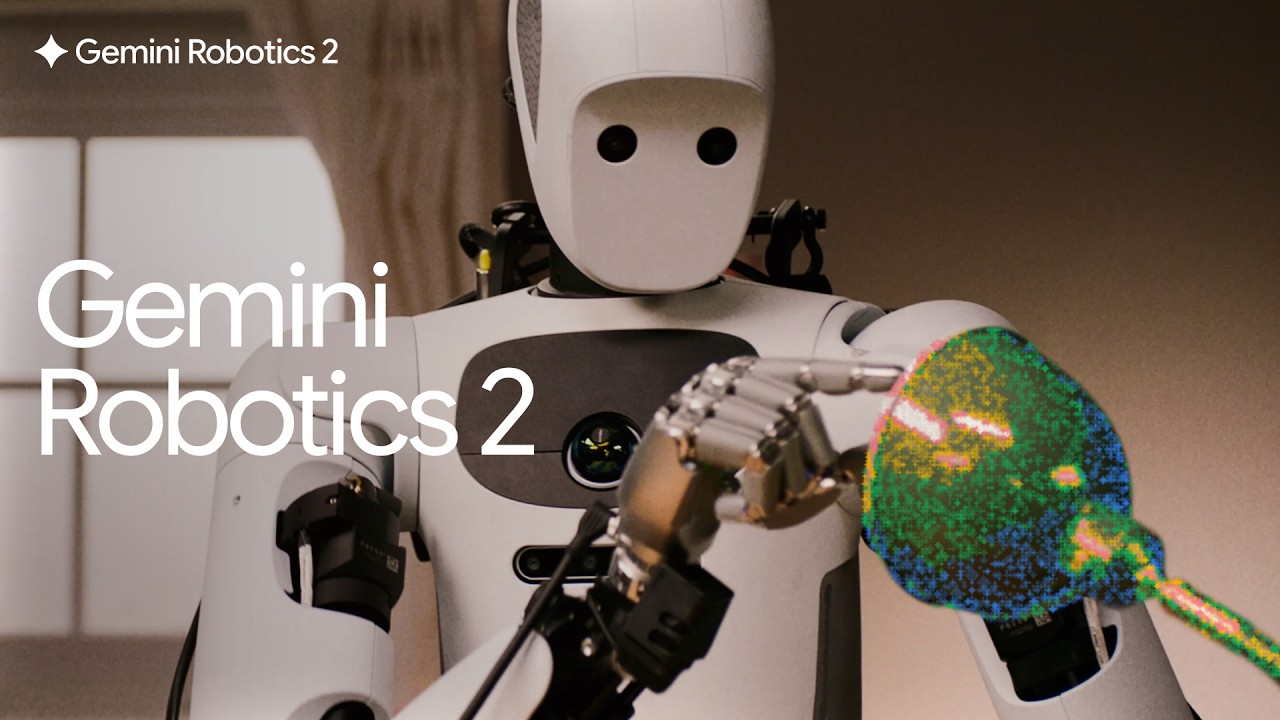
In one line: On July 30, Google DeepMind released Gemini Robotics 2 — a second-generation robotics foundation model that controls a humanoid’s legs, torso, arms and fingers under a single policy, demoing chores such as tying trash bags, sealing ziplock bags and changing lightbulbs on Apptronik’s Apollo 2; the same model checkpoint also drives gripper-based and five-fingered hands, prompting Chinese media to call it “the Android of robots.”
💡 Why it matters: The first-generation Gemini Robotics (March 2025) could only drive robotic arms and upper bodies for table-top tasks. Gemini Robotics 2 pushes the control boundary from “tabletop” to “whole body,” letting robots literally work while walking — a critical step from lab to real-world spaces. Just as important is cross-embodiment transfer: one model checkpoint directly drives three very different robots, attacking the industry’s most painful problem — the era of retraining from scratch for every new robot body may be ending.
Key facts:
- A three-model lineup: Gemini Robotics 2 (a VLA action model for whole-body control), Gemini Robotics ER 2 (embodied-reasoning model for planning and multi-robot collaboration), and Gemini Robotics On-Device 2 (an efficient VLA optimized to run locally on robots)
- Cross-embodiment demo: one model checkpoint controlling three hardware setups — Apptronik Apollo 2 with SharpaWave five-fingered 22-DOF hands, Apollo 2 with Inspire hands, and Franka Duo with Robotiq grippers
- Capability boundary: whole-body tasks include walking, crouching, stretching and cleaning a cluttered room; DeepMind explicitly acknowledges multi-finger dexterous manipulation “remains challenging”
- Release cadence: ER 2 is available on Google AI Studio and in private preview on Gemini Enterprise Agent Platform; VLA and On-Device models are open to early-access partners
- Fast adaptation: the on-device model adapts to entirely new robot embodiments with a few hours of data
📌 Bottom line: Google is betting on a “general brain + Android model” — the model is hardware-agnostic, building an ecosystem through multi-embodiment adaptation and on-device deployment. For Chinese robot makers this is a double-edged sword: in the short term they can adopt the Google brain and save R&D; long term, it may replay the Android-vs-HarmonyOS struggle for ecosystem dominance. Whoever owns the brain sets the rules.
🔗 Google DeepMind blog | Official demo video | Wallstreetcn: whole-body control for humanoids
2. 🏦 Zhiyuan Races Toward a Hong Kong IPO: RMB 36.3-43.3B Valuation, Possible August Listing
In one line: According to Chaochiwang (via Guangcong Intelligence), citing investors, Zhiyuan (AGIBOT) could list in Hong Kong as early as August, with cornerstone investors eyeing a target valuation of RMB 36.3-43.3 billion — roughly in line with Unitree’s ~RMB 42 billion — putting the two leaders of the embodied-AI pack on the same capital stage.
💡 Why it matters: Unitree’s STAR Market subscription opens August 10; if Zhiyuan lists in Hong Kong in August, the two top-tier companies will complete a “listing relay” within a single month. More notable is Zhiyuan’s commercialization track record: 2025 revenue surpassed RMB 1.05 billion, up 20x year over year, with CTO Peng Zhihui saying the company is “already self-sustaining.” Roughly three-quarters of R&D headcount and spending are concentrated in the “small and large brain” AI layer — hardware can be partnered out, but the brain must be owned. That is Zhiyuan’s answer to the technology-route debate.
Key facts:
- Valuation anchor: cornerstone target of RMB 36.3-43.3 billion, on par with Unitree’s ~RMB 42 billion
- Commercialization: 2025 revenue surpassed RMB 1.05 billion, up 20x YoY; the company says it is not short on cash
- Ecosystem build: in three years, 5 incubated subsidiaries, direct stakes in 20+ companies, at least 17 JVs, plus control of an RMB 51.3 billion A-share platform (Shangwei New Materials)
- Tech roadmap: the GO-2 model introduces “action chain-of-thought” with an asynchronous dual-system architecture, supporting thousand-robot collaborative training
📌 Bottom line: Unitree and Zhiyuan knocking on capital-market doors almost simultaneously signals that embodied AI has moved from “raising funds” to “listing and self-sustaining.” Zhiyuan’s playbook — acquiring an A-share platform while racing toward Hong Kong — offers a template for latecomers. But listing is just the start; the elimination game is always scored on volume and orders.
🔗 Chaochiwang/Guangcong Intelligence: Zhiyuan races to a HK IPO | Gasgoo weekly digest
3. 🛒 UBTECH’s U1 Tops 13,000 Preorders: A C-End “Second Growth Curve” Meets Its Delivery Test
In one line: UBTECH’s consumer humanoid U1 series has accumulated 13,361 preorders, with first deliveries scheduled for September 16; priced from RMB 119,800 to 990,000, with 2-4 hours of battery life and simmering disputes over real-device experience — the C-end experiment is both opportunity and risk.
💡 Why it matters: This is the first time a humanoid robot has faced Chinese household consumers at “tens of thousands of yuan” pricing, and the preorders validate demand-side curiosity. But the shortcomings laid out by International Finance News are equally stark: the volume model U1 Pro (RMB 159,800 after pre-sale discount) carries an 88-joint full-body architecture yet cannot walk autonomously, requires fixed placement, and lacks chores like sweeping, water fetching or health monitoring; official battery life is “about 4 hours,” while media reporting puts the full series at 2-4 hours. The stock spiked 18% intraday at launch, then fell ~19% over three sessions from July 6 — capital has already voted.
Key facts:
- Preorders: 13,361 units across the U1 series; first deliveries begin September 16
- Price ladder: U1 Lite RMB 119,800; U1 Pro RMB 169,800 (RMB 159,800 after pre-sale discount); U1 Ultra RMB 990,000 (male) / RMB 880,000 (female)
- Feature boundaries: U1 Pro is an 88-joint full-body architecture but cannot walk autonomously and offers no household-assistance functions
- Market reaction: launch-day intraday spike of 18%, closing +7.48% at HK$102.8; on July 6 the stock fell 10%, down ~19% over three sessions
- Industry lens: the SCMP asks in parallel — can China’s companion robots actually win a place at home?
📌 Bottom line: 13,000 preorders is a milestone for the consumerization of humanoids, but the gap between “companion narrative” and “hardware reality” is widening. September 16 delivery quality will decide whether the U1 opens the C-end market or burns trust. For the industry, the real value of this trial run is the first wave of real home-use data.
🔗 International Finance News: UBTECH goes C-end | South China Morning Post
4. 🚗 Automakers, Third Wave: Leapmotor’s RMB 210M Precision-Manufacturing Move, and the Turmoil Behind XPeng’s IRON Trial Production
In one line: A newly incorporated Huzhou Lingsheng Precision Manufacturing unit — capitalized at RMB 210 million and spanning auto parts, industrial robotics manufacturing and intelligent robot R&D — signals Leapmotor’s robot ambitions; meanwhile, XPeng’s humanoid IRON began small-batch trial production on July 24, yet its robotics lead departed in early June and a recall of 33,473 X9 SUVs landed the same day — manufacturing fundamentals keep getting stress-tested.
💡 Why it matters: Nearly 20 mainstream automakers have entered the robot business in the first half of the year; “robot-making” has moved from slogans to real money. Leapmotor chairman Zhu Jiangming’s stance is pragmatic — “investment in factory automation must pay for itself through labor savings within three years.” XPeng’s case shows the other side: He Xiaopeng reportedly proposed an annual production target of 60,000 robots, clashing with robotics head Shi Xiaoxin (later revised to 10,000), who asked “where do we put 10,000 robots?” — optimism about production targets is colliding with the reality of sales channels.
Key facts:
- Leapmotor’s move: Huzhou Lingsheng Precision Manufacturing Co. established with RMB 210 million in capital, wholly owned by Leapmotor’s Zhejiang Lingsheng Power Technology; business scope includes industrial robot manufacturing and intelligent robot R&D
- XPeng IRON: small-batch trial production began July 24 at the Guangzhou plant; mass production planned by end-2026, entering offline stores in Q1 2027 for guiding and shopping assistance
- Personnel turbulence: robotics head Shi Xiaoxin departed in early June; media tie the exit to disagreements over production targets
- Same-day shadow: XPeng filed a recall of 33,473 X9 SUVs over front air-spring air-tightness risks
📌 Bottom line: Automakers are the most aggressive robot players — and the most realistic ones. The three-year payback discipline, the 60,000-vs-10,000 unit target tug-of-war, and the X9 recall all underline a simple fact: robot mass-production narratives must ultimately be delivered through engineering and supply-chain fundamentals.
🔗 NBD/Sina: Leapmotor sets up precision manufacturing unit | TMTPost/Sina: the eve of XPeng’s physical AI
5. 🗣️ Fei-Fei Li on Form Factor: The Human Body Is Not the Optimal Solution for Specific Tasks
In one line: In a recent interview, “AI godmother” Fei-Fei Li argued that while the general human body adapts to diverse environments, it is not the optimal solution for any specific task; from a technology-and-business standpoint, general structures are precisely the hardest to solve, and real-world deployment increasingly calls for specialized forms matched to specific jobs.
💡 Why it matters: When the entire industry flocks to “human form,” Li offers a contrarian lens — form is a means, not the end. This resonates with Google’s multi-embodiment approach in Gemini Robotics 2: the same brain can drive humanoids, bi-arm platforms and gripper systems, so form should be dictated by task and cost, not by an anthropomorphic bias.
Key facts:
- Core argument: the human body adapts to diverse environments but is not optimal for any specific task
- Deployment judgment: general structures are the hardest to solve; specialized forms are more pragmatic
- Industry mapping: the form-factor debate (humanoid vs. specialized) will be a main axis of technology-route divergence over the next two years
📌 Bottom line: There is no single right answer in the form-factor debate, but Li reminds the industry of an easily overlooked dimension — when “humanoid” becomes the default narrative, companies bold enough to derive form from task may be the biggest winners on efficiency and cost.
🔗 The Paper: Fei-Fei Li on humanoid form factor | Guandian
📊 This Week’s Watchlist: Three Signals
- Capital’s twin race — Unitree’s STAR Market subscription opens Aug 10; Zhiyuan could list in Hong Kong in August; embodied AI enters a market-cap ranking game
- Delivery tests pile up — UBTECH’s U1 delivers Sept 16, XPeng’s IRON mass-produces by end-2026; H2 becomes the season where real machines speak
- The brain war heats up — Google opens ER 2 to developers while Chinese leaders accelerate in-house brain development; ecosystem dominance becomes the next battleground
🔭 Tomorrow’s watch: institutional pricing games in Unitree’s final pre-subscription week; UBTECH’s narrative repair ahead of U1 delivery; and Chinese embodied-AI responses to Gemini Robotics 2.
Daily Pulse by SinoBot Editorial | Data as of Aug 4, 2026 | Image credit: Google DeepMind Dual polish pending (Gemini + ChatGPT)