Daily Pulse #56 | Aug 5 Wednesday Edition | BYD unveils 'Xiao Di' humanoid for an early-August debut in Zhengzhou — a store-greeter first, backed by a 'Yao-Shun-Yu' three-step plan; US FCC ban expands to robot vacuums, pressuring China's cleaning-robot exporters; Unitree guides H1 revenue growth above 35% ahead of Aug 10 subscription
🎯 Wednesday Briefing (Aug 5)
Today’s theme: blockade and acceleration running in parallel. The US FCC has expanded its ban from humanoid robots to robot vacuums, lawn mowers and other mobile home robots, putting China’s cleaning-robot exporters on the front line. On the domestic side, BYD officially confirmed its self-developed humanoid ‘Xiao Di’ will debut at its Zhengzhou D Space venue in early August — starting as a store greeter, with Forbes praising the strategy as superior to Tesla’s. Unitree guides H1 revenue of RMB 1.052-1.128 billion, up over 35% YoY, ahead of its Aug 10 IPO subscription. Zhiyuan disclosed its nine-partner lineup at a critical IPO juncture — without chief scientist Luo Jianlan. And Shenzhen activated its first humanoid-robot pilot production line.
• 🤖 BYD’s ‘Xiao Di’ confirmed — 1.61m / 58.5kg / 31 DoF, global debut at Zhengzhou D Space in early August, starting as a store greeter • 🇺🇸 FCC ban expands to robot vacuums — home robots join humanoids on the restricted list, pressuring Chinese cleaning-robot exporters • 📊 Unitree H1 revenue up 35%+ — RMB 1.052-1.128B expected, ahead of Aug 10 subscription • 🏦 Zhiyuan reshuffles ahead of IPO — nine partners disclosed, chief scientist Luo Jianlan absent • 🏭 Shenzhen’s first humanoid pilot line — the missing link from lab to mass production starts filling in
1. 🤖 BYD Confirms Humanoid ‘Xiao Di’: Zhengzhou Debut in Early August, Starting as a Store Greeter
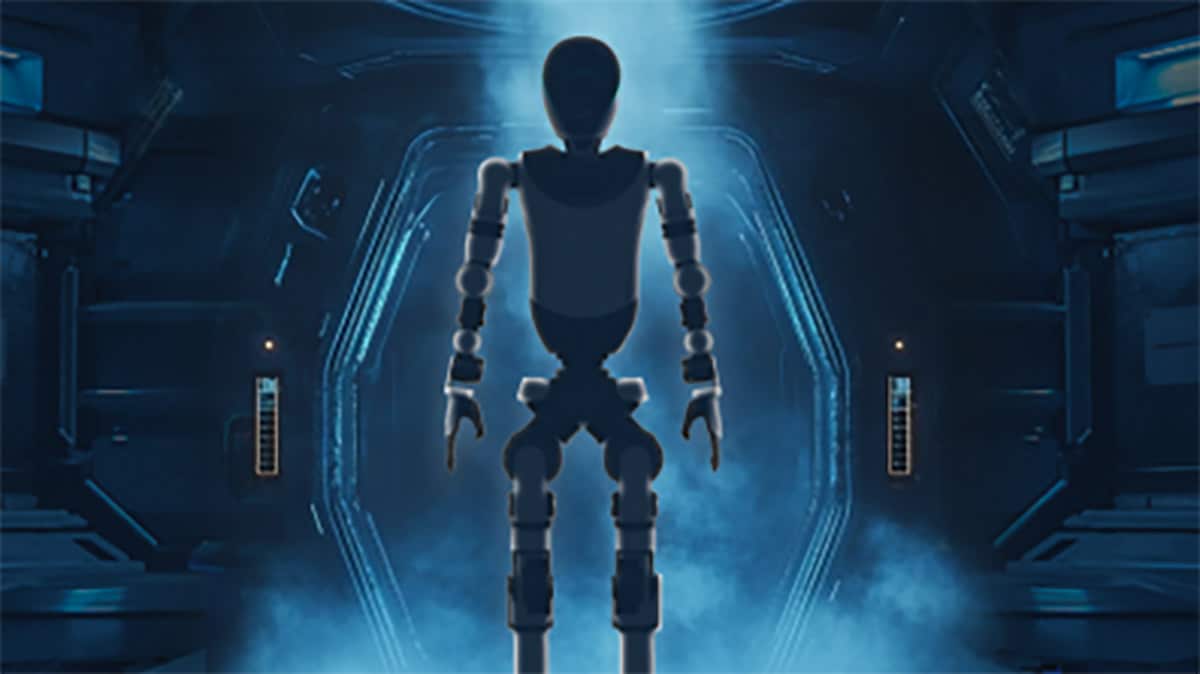
In one line: BYD confirmed on July 28 that its self-developed humanoid robot ‘Xiao Di’ will make its global public debut at its D Space venue in Zhengzhou in early August — 1.61m tall, 58.5kg, 31 degrees of freedom, with a first job as a store greeter handling reception, vehicle-model explanations and in-car system demos.
💡 Why it matters: This is BYD’s first official public showing of a self-developed humanoid. Unlike Tesla’s Optimus path of “factory first, home later,” BYD chose “store first, home later” — validating stability in a controlled showroom environment before expanding to supermarkets, warehouses and households. Forbes has argued BYD’s humanoid strategy beats Tesla’s: by leveraging its EV battery, motor and control technology, component commonality exceeds 60% with ~80% self-developed, giving a clearer path to cost reduction at scale.
Key facts:
- Core specs: 1.61m tall, 58.5kg, 31 DoF; dexterous hands with ±1mm repeatability positioning, capable of lifting 1kg and performing sorting and grasping tasks
- Interaction: real-time two-way translation across 6 Chinese dialects and 6 foreign languages; 360° vision with dynamic modeling; recognizes living objects and transparent glass; facial, lip-movement and gesture recognition
- Deployment cadence: BYD EVP Stella Li says the plan is 2-3 robots per dealer store, handling reception, model explanations and vehicle demos
- Three-step roadmap: 20,000 self-developed robots in BYD factories in 2026 replacing high-risk jobs → store commercial deployment → ultimately home market, with per-unit cost target under RMB 200,000
- Self-development: internal codename “Yao-Shun-Yu,” built on EV powertrain and control tech; embodied-intelligence team established as early as 2022
📌 Takeaway: BYD’s entry moves “automakers making robots” from slogans to real machines. Its edge is not novel robot hardware but supply chain and manufacturing: reusable batteries, motors and control systems give the “sub-RMB 200,000 home humanoid” its first realistic timeline. Store greeting is step one — and a pragmatic bet by a Chinese automaker on a commercial use case for humanoids.
🔗 KrASIA: BYD’s humanoid robot to begin work at D Space facility in August | 21st Century Business Herald via QQ News | Sina Finance: BYD humanoid to debut early August
2. 🇺🇸 FCC Ban Expands: Robot Vacuums and Lawn Mowers Caught — China’s Cleaning-Robot Exporters Under Pressure
In one line: The FCC rule that took effect July 29 bans not only new Chinese-made humanoids but also robot vacuums, lawn mowers and other mobile home robots — The Verge summed it up as “the US government just banned Roombas,” a direct hit to Chinese cleaning-robot makers’ North American business.
💡 Why it matters: This is the most worrying sign of the ban’s spillover. The humanoid restriction had a “national security” narrative; robot vacuums are a pure consumer category. Chinese vendors — Roborock, Dreame, Ecovacs — hold over half of the global market, with North America a key profit pool. If the ban is enforced, it reshapes not just new-product sales but the entire global supply chain and pricing of cleaning robots.
Key facts:
- Scope: the new FCC rule covers imported new humanoids and mobile robots; robot vacuums and lawn-mowing robots are explicitly included
- Effective date: July 29, 2026; multiple outlets read it as targeting Chinese products
- Market impact: PCMag, ZDNET and The Verge all covered it, with “your next robot vacuum may be harder to buy” becoming a mainstream US consumer topic
- Prior signal: Reuters reported July 29 that the Trump administration banned new Chinese humanoids, citing protection of the US AI buildout
📌 Takeaway: The ban’s boundary is sliding from “humanoid” to “mobile robots” generally. Chinese cleaning-robot makers should seriously model North American policy risk: near-term, shipped products and inventory are unaffected; medium-term, capacity relocation or localized production may become unavoidable options.
🔗 The Verge: The US government just banned Roombas | PCMag: FCC Ban on Foreign-Made Robots Includes Robot Vacuums | ZDNET: What the FCC ban means for your Roomba | Reuters: Trump administration bans new Chinese humanoid robots
3. 📊 Unitree: H1 Revenue Expected at RMB 1.052-1.128B, Up Over 35%, Ahead of Aug 10 Subscription
In one line: Unitree updated its IPO prospectus, expecting H1 2026 revenue of RMB 1.052-1.128 billion, up over 35% YoY — a fresh scorecard just before its STAR Market subscription on Aug 10.
💡 Why it matters: This is the key financial validation before the “first humanoid-robot IPO.” Revenue growth above 35% shows demand remains on a high-growth track, but investors will scrutinize gross margins and loss narrowing — whether the RMB 42 billion offering valuation is a floor or a ceiling will be answered by fundamentals.
Key facts:
- Guidance: H1 2026 revenue of RMB 1.052-1.128 billion, up over 35% YoY (CLS)
- Timeline: STAR Market subscription starts Aug 10, raising about RMB 4.2 billion
- Valuation anchor: offering valued at roughly RMB 42 billion; Meituan and Alibaba are investors
- Industry context: Zhiyuan (cornerstone valuation RMB 36.3-43.3B) is knocking on the capital market door at nearly the same time
📌 Takeaway: Unitree’s subscription and debut will set the tone for the humanoid sector. Strong oversubscription and a hot first day could re-rate the whole supply chain; a cold reception could trigger a sector-wide pullback.
🔗 CLS: Unitree expects H1 revenue of RMB 1.052-1.128 billion | ZDNet China: Unitree H1 revenue growth over 35%
4. 🏦 Zhiyuan Reshuffles at an IPO Juncture: Nine Partners Disclosed, Chief Scientist Luo Jianlan Absent
In one line: Zhiyuan (AGIBOT) disclosed its full nine-partner lineup for the first time — chief scientist Luo Jianlan, previously a core technical leader, is not on the list; the company denies he has left, but the timing at the peak of its Hong Kong IPO push has drawn market attention.
💡 Why it matters: Team stability is a core variable in IPO pricing. Luo Jianlan is the technical core of Zhiyuan’s embodied-AI foundation models, known for the remark that “benchmark chasing is meaningless.” Whether or not he actually leaves, the episode signals that “talent de-risking” before listing is becoming common across embodied-intelligence companies.
Key facts:
- Lineup change: Zhiyuan disclosed nine partners for the first time; Luo Jianlan, previously chief scientist, is absent
- Official response: Zhiyuan denies Luo’s departure, attributing the news to the new partner-team reveal
- IPO timing: a Hong Kong listing as early as August, cornerstone valuation of RMB 36.3-43.3 billion
- Commercial foundation: 2025 revenue surpassed RMB 1.05 billion, up 20x YoY; company says it is “self-sustaining”
📌 Takeaway: Personnel news during an IPO window needs double reading: it is both a governance-disclosure milestone and a stress test of reliance on the core team. Whether Zhiyuan keeps its technology narrative stable before listing will directly color cornerstone pricing.
🔗 Zhidx: Zhiyuan discloses nine partners for the first time — Luo Jianlan missing | 21st Century Business Herald: core listing team revealed, chief scientist absent | Guandian: reports of Luo Jianlan’s departure
5. 🏭 Shenzhen Activates Its First Humanoid Pilot Production Line: Infrastructure Catch-up Before Mass Production
In one line: Shenzhen’s first humanoid-robot pilot production line went into operation on Aug 4, giving local firms a validation channel from prototype to small-batch production — the most overlooked and most constraining link between lab and mass production.
💡 Why it matters: Pilot lines solve the gap between “can build it” and “can build it reliably.” Joint consistency, assembly processes and whole-unit reliability all need repeated validation before mass production. Shenzhen, as the global hardware supply-chain hub, closing this gap could significantly accelerate humanoid production timelines.
Key facts:
- The line: Shenzhen’s first humanoid-robot pilot production line, activated Aug 4 (Yicai, Guangming)
- Industrial base: Shenzhen’s above-scale industrial value added rose 8.7% YoY in H1; manufacturing grew 9.3%
- Regional race: Hangzhou’s physical-AI output has passed RMB 100 billion, with 80% of robot-dog share and 50% of humanoid share — city-level competition is heating up in parallel
📌 Takeaway: Humanoid competition has shifted from “publishing papers and showing prototypes” to “building lines and competing on yield.” Whoever masters pilot and mass production first holds pricing power in the second half.
🔗 Yicai: Shenzhen’s first humanoid pilot line activated | Guangming: Shenzhen’s first humanoid pilot line operational
📊 This Week’s Watchlist: Three Threads
- Blockade and counter-momentum — the FCC ban extends to home robots, pressuring Chinese cleaning-robot exports; domestic automakers and capital accelerate entry, strengthening the self-reliance narrative
- Twin capital-market windows — Unitree subscribes Aug 10, Zhiyuan may list in Hong Kong as early as August; embodied intelligence enters a “market-cap ranking match”
- Mass-production infrastructure race — Shenzhen’s pilot line opens, Hangzhou’s physical AI passes RMB 100B; city-level industrial positioning heats up
🔭 Next up: institutional pricing games ahead of Unitree’s subscription; Xiao Di’s real-machine performance and spec delivery at the Zhengzhou debut; and a concrete impact assessment of FCC rules on cleaning-robot exports.
Daily Pulse by SinoBot Editorial | Data as of Aug 5, 2026 | Image credits: CnEVPost, KrASIA Dual polish pending (Gemini + ChatGPT)