Daily Pulse #57 | Aug 6 Thursday Edition | Xiaomi goes all-in on two fronts: open-sources embodied-AI foundation model Xiaomi-Robotics-1 while CyberOne starts 'internship' at EV factory; Unitree IPO bookbuilding opens with bids implying up to ¥55B valuation; robot vacuum brands respond to FCC ban as Roborock's dual-globalization strategy faces pressure
🎯 Thursday Briefing (Aug 6)
Today’s throughline: open source and mass production, moving toward each other. Xiaomi officially open-sourced its embodied-AI foundation model Xiaomi-Robotics-1 while CyberOne began working as an “intern” at its own EV factory — open source builds the base, factories run the scenarios. On the capital side, Unitree’s STAR Market IPO entered bookbuilding with bids implying a valuation of up to ¥55 billion, clearing regulatory review in a record 73 days. Across the Pacific, the FCC ban on foreign-made robot vacuums drew collective responses from Shark, iRobot and Eufy, putting Roborock’s “dual globalization” strategy under direct test. Private markets stayed hot: the humanoid sector logged 39 funding rounds worth over ¥11 billion in July.
• 🤖 Xiaomi, two fronts at once — Open-sources Xiaomi-Robotics-1 foundation model; CyberOne starts “internship” at EV factory • 📊 Unitree bookbuilding opens — Bids imply valuation up to ¥55 billion; 73-day record clearance • 🇺🇸 FCC ban fallout — Shark/iRobot/Eufy respond; Roborock’s “dual globalization” under pressure • 💰 July funding map — 39 rounds, ¥11B+ in the humanoid sector • 🏭 Embodied AI blooms — CATL backs a “embodied DeepSeek”; 29-second video teaches robots new skills
1. 🤖 Xiaomi, Two Fronts at Once: Xiaomi-Robotics-1 Goes Open Source While CyberOne Starts “Internship” at the EV Factory
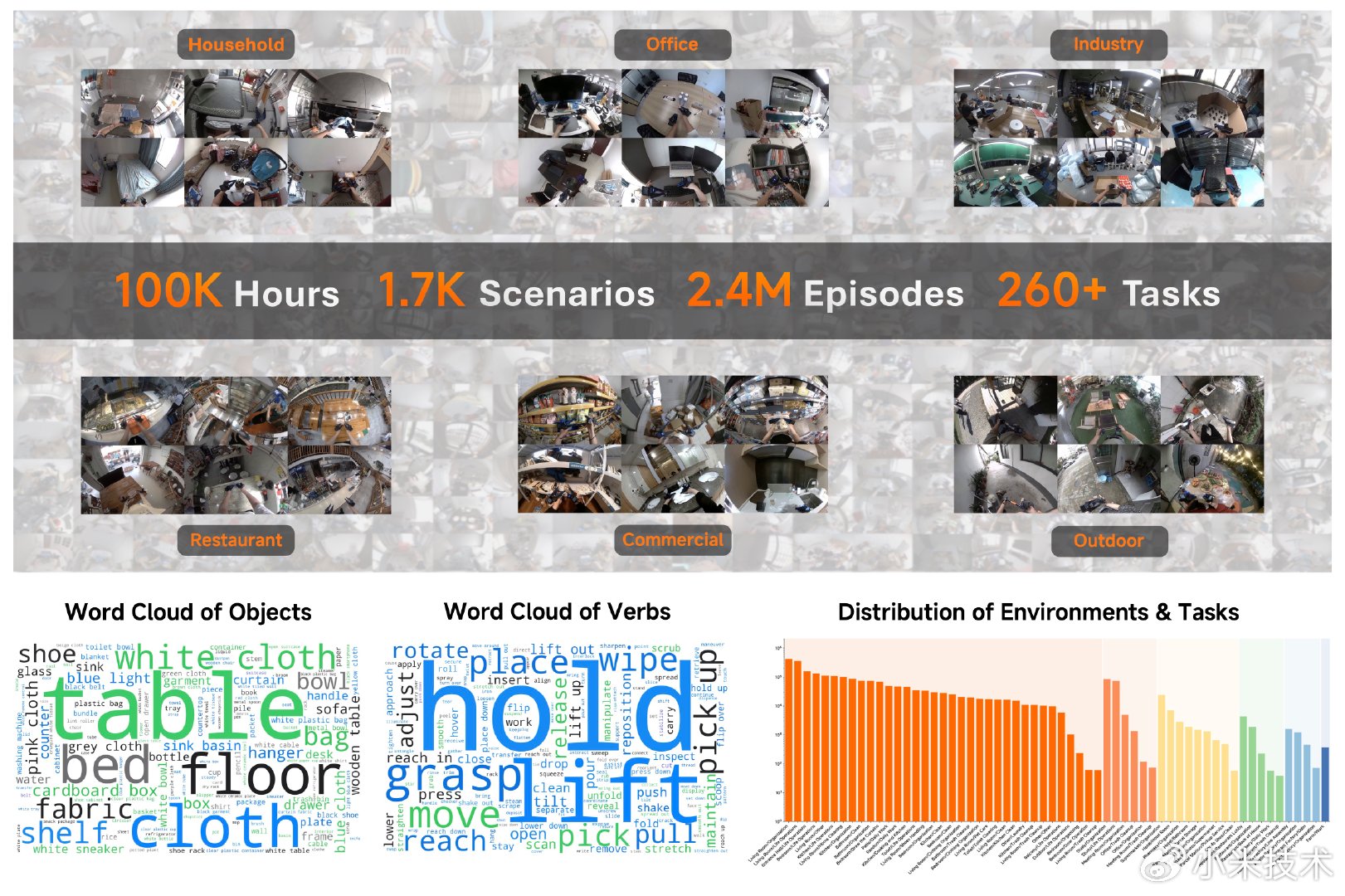
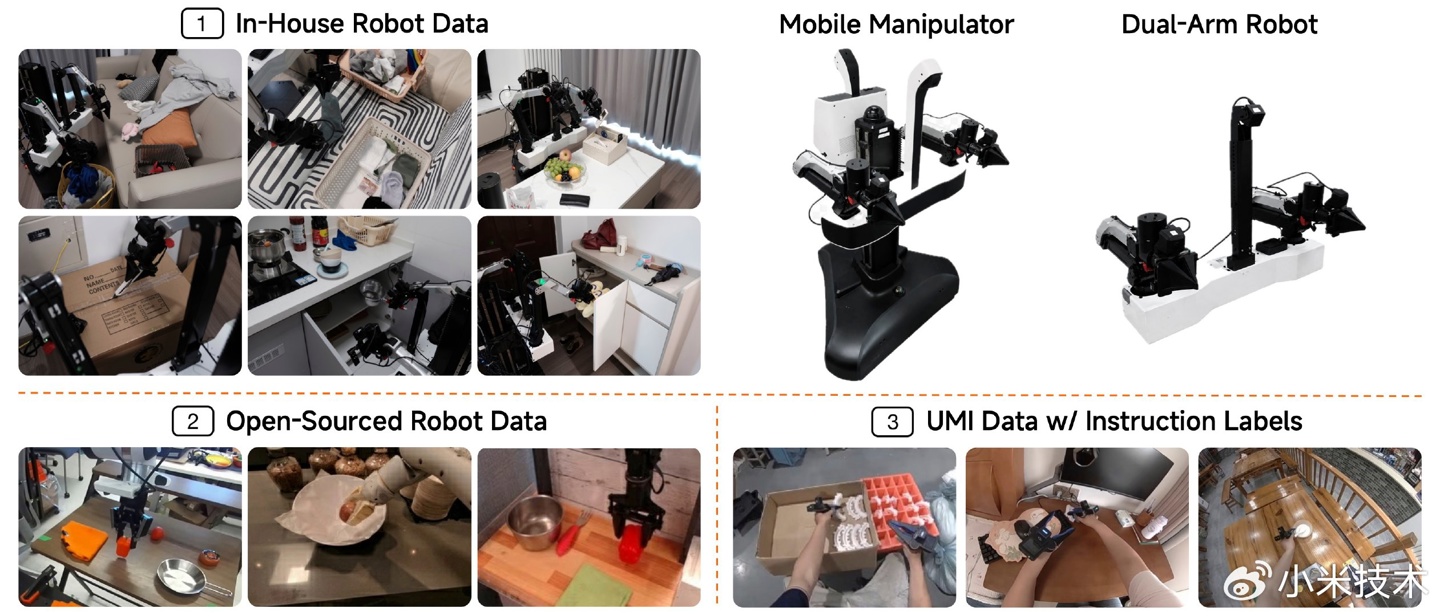
In one sentence: On Aug 5, Xiaomi’s tech account announced the official open-sourcing of its embodied-AI foundation model Xiaomi-Robotics-1 — pretrained on 100,000+ hours of UMI data and post-trained on 10,000+ hours of cross-embodiment data, covering the full pipeline from real-robot post-training to deployment plus benchmark evaluation code; almost simultaneously, CNBC reported Xiaomi’s CyberOne humanoid is already on the job at its EV factory as an “intern,” with mass deployment planned.
💡 Why it matters: This is a landmark move by a Chinese smartphone giant on the “open-source” side of embodied intelligence. Rather than keeping the model closed, Xiaomi released the foundation model and its evaluation code to the public — a bid for developer ecosystem mindshare and de facto standard-setting. Putting CyberOne in the factory is step one of landing that open-source base in a real production scenario. Open source plus real-world deployment lets Xiaomi stake claims on both the model layer and the scenario layer at once.
Key facts:
- Model specs: Pretrained on 100,000+ hours of UMI (Universal Manipulation Interface) data; post-trained on 10,000+ hours of cross-embodiment data; two-stage “pretrain + post-train” paradigm — pretraining learns general action generation, predicting action sequences that move a scene from current state to target state given visual observations and language descriptions
- Open-source scope: Full pipeline from real-robot post-training to model deployment, plus benchmark evaluation code; project website, GitHub (XiaomiRobotics/Xiaomi-Robotics-1) and Hugging Face all live
- Timeline: First unveiled in July as an “out-of-the-box” embodied foundation model; officially open-sourced Aug 5
- Factory deployment: CNBC reports Xiaomi is trialing CyberOne at its EV factory, describing the robots as “interns”; Cybernews says Xiaomi plans mass deployment
- Capital markets: Goldman Sachs is bullish on Xiaomi’s robotics integration, maintaining Buy with a HK$40 target price
📌 Takeaway: Xiaomi’s playbook is coming into focus — open-source foundation model to court developers, own factories to close the real-scenario data loop. A phone maker’s edge in robotics was never the hardware; it’s the compound advantage of scenario, data and ecosystem. Open-sourcing is both a response to embodied players like Unitree and Zhiyuan, and Xiaomi’s strategic bet on the next computing platform.
🔗 ITHome: Xiaomi’s embodied foundation model Xiaomi-Robotics-1 officially open-sourced | TechNode: Xiaomi open-sources embodied-AI foundation model Xiaomi-Robotics-1 | CNBC: Xiaomi trials humanoid robots in its EV factory | GitHub: XiaomiRobotics/Xiaomi-Robotics-1
2. 📊 Unitree IPO Bookbuilding Opens: Bids Imply Up to ¥55B Valuation, 73-Day Record Clearance
In one sentence: Unitree’s STAR Market IPO has entered bookbuilding, with institutional bids implying a valuation of up to ¥55 billion; from filing to registration approval took just 73 days — a record — with the public subscription set for Aug 10.
💡 Why it matters: Bookbuilding results are the anchor for IPO pricing. Caixin reports institutional bids imply a valuation of up to ¥55 billion — above earlier expectations of around ¥42 billion — meaning the market is paying a premium for the “first humanoid-robot stock.” That sets the tone not just for Unitree’s raise, but for the valuation benchmark of the entire embodied-intelligence sector.
Key facts:
- Bookbuilding: Caixin Global reports Unitree’s IPO bookbuilding is open, with bids implying a valuation of up to ¥55 billion (~US$7.4 billion)
- Speed record: From filing to STAR Market registration approval in 73 days (biggo), a record
- Supply-chain spillover: 36Kr reports Unitree suppliers are already seeing valuations hit ¥20 billion — the IPO is re-rating the whole supply chain
- Timeline: Public subscription starts Aug 10; Citic expects a post-IPO market value above US$7.4 billion
- Earnings backing: H1 2026 revenue of ¥1.052B–1.128B, up over 35% year-on-year (previously disclosed)
📌 Takeaway: A ¥55 billion valuation band means the secondary market is willing to pay a significant premium for the “first humanoid-robot stock.” Whether that premium holds depends on subscription demand and first-day price consensus. Unitree’s outcome will become the reference point for pricing subsequent embodied-intelligence IPOs such as Zhiyuan.
🔗 Caixin Global: Unitree IPO Opens With Bids Implying Up to 55 Billion Yuan Valuation | Global Times: Unitree kicks off STAR Market IPO pricing | Tech in Asia: Unitree eyes over $7.4b valuation in Shanghai IPO | 36Kr: Unitree’s Supplier Valuation Hits 20 Billion
3. 🇺🇸 FCC Ban Fallout: Robot Vacuum Brands Respond, Roborock’s “Dual Globalization” Under Pressure
In one sentence: After the FCC’s new rule swept in robot vacuums, Shark, iRobot, Eufy and others issued their first collective responses; Eastmoney reports Roborock’s share price is weakening as its “dual globalization” strategy meets a policy black swan — the ban’s impact is shifting from media shock to corporate response.
💡 Why it matters: Brand responses are the clearest window into the ban’s real impact. Existing models are unaffected while new models face restrictions — meaning short-term inventory is safe, but new-product cadence and North American market share face medium-term pressure. For Chinese makers like Roborock, Dreame and Ecovacs, which rely on North America for profits, the irreversibility of policy is redrawing the globalization math.
Key facts:
- Brand statements: Mashable rounds up statements from Shark, iRobot, Eufy and more; US robotics industry groups voiced support for the ban
- Enforcement boundary: Vacuum Wars reports existing models are unaffected; new foreign-made models face restrictions
- Domestic transmission: Eastmoney reports Roborock’s stock is under pressure, with its “dual globalization” strategy (overseas markets + overseas production) tested by the FCC ban
- Regulatory framing: Yicai reports the new FCC rule restricts new robot vacuum models from entering the market
📌 Takeaway: The ban’s shockwave is moving from headlines into earnings and share prices. Short term, inventory and already-sold models are safe; medium term, new-model approvals, capacity layout and brand image all face pressure. “Localized production” is shifting from a cost option to a compliance necessity — Chinese cleaning-robot makers need to rewrite their globalization narrative.
🔗 Mashable: Robot vacuum brands respond to the FCC ban | Vacuum Wars: FCC Restricts Future Foreign-Made Robot Vacuums | Eastmoney: Roborock’s dual-globalization strategy meets FCC ban | Yicai: New FCC rule restricts robot vacuums
4. 💰 July Humanoid Funding Map: 39 Rounds, ¥11B+
In one sentence: According to EET-China’s tally, the humanoid-robot sector closed 39 funding rounds in July totaling over ¥11 billion, with core components — reducers, dexterous hands, tactile sensors — drawing the heaviest capital concentration.
💡 Why it matters: The funding mix says more than the total. When capital spreads from complete robots into core components (reducers, dexterous hands, tactile sensing), the industry is moving from concept validation to supply-chain positioning — the classic signature of a sector on the eve of mass production.
Key facts:
- Scale: 39 rounds, ¥11B+ in July (EET-China tally)
- Component heat: A reducer maker supplying Foxconn just closed a nine-figure round; Pasini, Yuelang Bionics, Deta Intelligent and Tashan Tech all reported fresh funding
- Valuation sample: Shenzhen’s Taoshi Intelligent closed a ¥140M Series A at a valuation above ¥1 billion, with Nanshan and Qianhai funds participating
- New blood: A 22-year-old HIT undergraduate’s team — building bipedal robots “from a dorm room” — raised ¥500M, a viral case study
📌 Takeaway: Private-market money is concentrating on bottleneck components. Public listings by robot makers (Unitree, Zhiyuan) open exit channels, component makers raise to expand capacity, and the humanoid supply-chain arms race is on.
🔗 EET-China: 39 rounds, ¥11B+ — July humanoid funding map | Zhidx: Taoshi closes ¥140M Series A | MyDrivers: 22-year-old HIT undergrad raises ¥500M
5. 🏭 Embodied AI Blooms: CATL Backs an “Embodied DeepSeek”; 29-Second Videos Teach Robots New Skills
In one sentence: CATL invested in Luobo Party (dubbed an “embodied DeepSeek” by the market); Tsinghua and Beijing Institute of Technology co-open-sourced HOST, which teaches robots new skills from a 29-second video — a new paradigm for data efficiency in embodied intelligence.
💡 Why it matters: Both stories point to the same trend: the training paradigm for embodied intelligence is being rewritten. A major strategic investor (CATL) is betting on new teams in the data and model layer, while the university open-source approach tries to cut the cost of teaching robots from oceans of data down to a single 29-second video. Data-efficiency competition is a more fundamental variable than parameter scale.
Key facts:
- CATL investment: CATL invested in Luobo Party, which the market likens to an “embodied DeepSeek” (Sina Finance)
- Data-efficiency breakthrough: Tsinghua and BIT co-open-sourced HOST; a 29-second video teaches a robot a new skill (TMTPost)
- Industry significance: If HOST-class approaches scale, they will sharply cut data-collection costs and training barriers for embodied intelligence
📌 Takeaway: The competition in embodied intelligence is shifting from “who can move” to “who learns faster.” When new technical routes compress data-collection costs, smaller teams can also compete in foundation models — an impact on industry structure that may run deeper than any single funding round.
🔗 Sina Finance: CATL invests in Luobo Party, an “embodied DeepSeek” emerges | TMTPost: Tsinghua & BIT open-source HOST
📊 This Week’s Watchlist: Three Threads
- Open source meets mass production — Xiaomi open-sources its foundation model and lands robots in factories; the “open-source camp” of embodied AI expands, offering a route contrast with the “closed-source in-house” camp of Unitree and Zhiyuan
- IPO pricing window — Unitree’s bookbuilding implies up to ¥55B valuation with subscription on Aug 10; Zhiyuan’s HK listing is imminent; embodied intelligence enters the second half of the “market-cap ranking race”
- Policy reshapes globalization — The FCC ban extends from humanoids to robot vacuums, brands respond collectively, and Chinese cleaning-robot makers enter a period of rewriting their globalization narrative
🔭 Watch tomorrow: Final unitree bookbuilding results and the issue-price range; more details on Xiaomi’s CyberOne factory deployment and capacity plans; concrete estimates of the FCC ban’s impact on Chinese cleaning-robot makers’ North American business.
Daily Pulse by SinoBot Editorial | Data as of Aug 6, 2026 | Image credit: ITHome (Xiaomi official) Dual polish pending (Gemini + ChatGPT)