Daily Pulse #59 | Aug 9 Sunday Edition | 2nd World Humanoid Robot Games set for Aug 22 at Ice Ribbon: 50 events, fully autonomous sprint, new table tennis + boxing + dexterous-hand challenges, tickets from ¥98; Huawei Qiankun ADS valet-charging demo: robotic arm auto-plugs the charger; Hubei's first Unitree Industry College founded; Sungrow: FCC policy mainly hits new certifications; Cloudflare: AI bot traffic now exceeds humans
🎯 Sunday Briefing (Aug 9)
Today’s throughline: athletics and infrastructure, side by side. The 2nd World Humanoid Robot Games is set for Aug 22–26 at the Ice Ribbon with a record 50 events — track events fully autonomous, new table tennis, boxing and dexterous-hand challenges — for the first time, humanoid athletic ability is being systematically tested Olympic-style. Huawei’s Qiankun ADS valet-charging demo pulls robotic arms into the refueling loop: the vehicle finds its own charging bay and the arm auto-plugs the gun. Unitree, fresh off its IPO pricing, is moving into talent development — Hubei’s first Unitree Industry College opened at a vocational college. The FCC ban’s ripples are reaching inverters and energy storage: Sungrow confirms already-certified US products are unaffected. Finally, Cloudflare drops a number that reframes the internet: AI bot traffic has already overtaken human traffic.
• 🏆 2nd World Humanoid Robot Games dated — Aug 22–26 at Ice Ribbon; 50 events; fully autonomous sprint; new table tennis + boxing + dexterous-hand • 🔌 Huawei valet charging revealed — Robotic arm auto-plugs via visual positioning; fully unattended refueling • 🏫 Hubei’s first Unitree Industry College founded — Unitree × vocational college; dual-dean structure; targets debugging/maintenance roles • ⚡ Sungrow on FCC — Policy mainly restricts new certifications; certified US products unaffected • 🤖 Cloudflare: AI bots outpace humans — Non-human traffic overtook humans in May 2026; 1:1000 ratio possible in five years
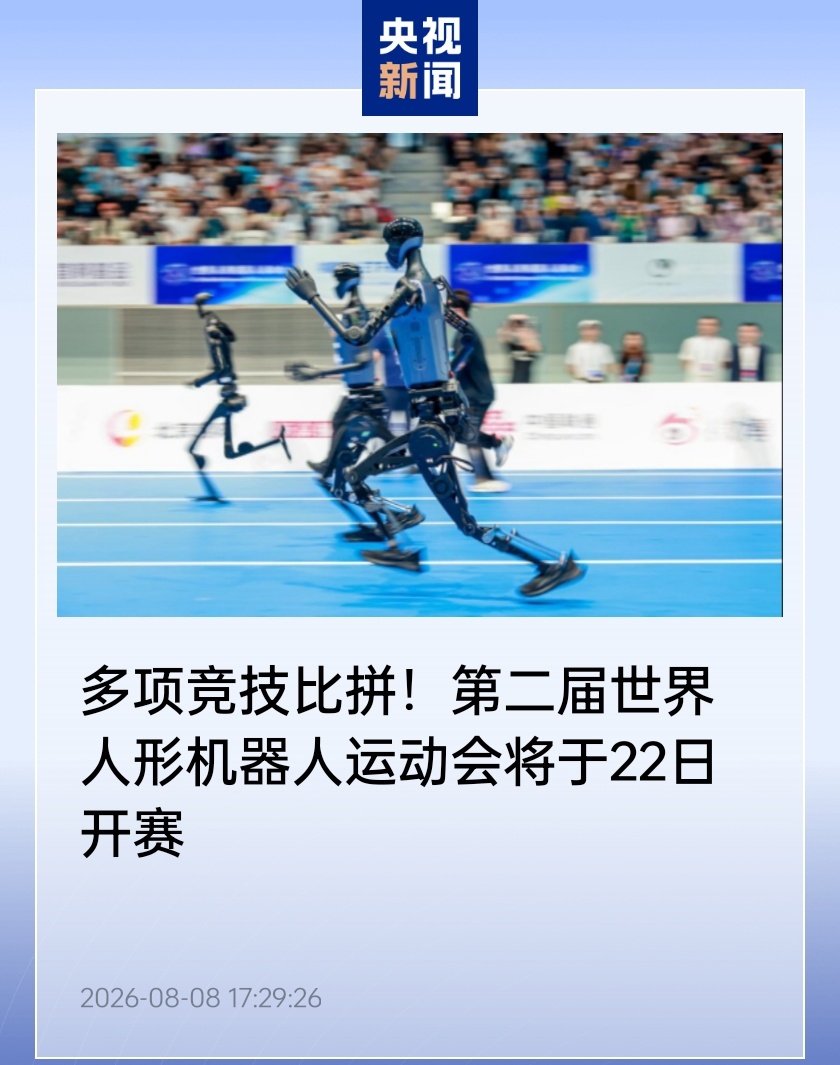
1. 🏆 2nd World Humanoid Robot Games Set for Aug 22: 50 Events, Fully Autonomous Sprint, New Table Tennis + Boxing + Dexterous-Hand Challenges, Tickets from ¥98
In one sentence: The 2nd World Humanoid Robot Games will run Aug 22–26 at the National Speed Skating Oval (the “Ice Ribbon”) with 50 events (29 competitive, 21 scenario-based); the 100m, 400m, 1500m and 4×100m relay are all upgraded to “fully autonomous” mode, with new table tennis, boxing, tug-of-war, pitch-pot and weightlifting events plus a first-ever dexterous-hand challenge; day tickets start at ¥98.
💡 Why it matters: The inaugural Games in August 2025 at the same venue had just 26 events, 280 teams from 16 countries and regions. A year later, the event count has nearly doubled, and track events have moved from remote-controlled/semi-autonomous to “fully autonomous” — robots must complete races relying entirely on their own perception and decision-making. This is not a show: the fully autonomous 100m tests locomotion control and gait planning, table tennis tests millisecond dynamic response, and boxing tests balance under physical confrontation. When the humanoid “Olympics” moves from demo to competition, the industry finally gets a unified, quantifiable capability benchmark — exactly the signal of a sector moving from lab to scale.
Key facts:
- When & where: Aug 22–26, National Speed Skating Oval (“Ice Ribbon”); co-hosted by the Beijing Municipal Government, China Media Group, the World Robot Cooperation Organization and the Asia-Pacific Robot Cup International Council
- Scale: 50 events (29 competitive, 21 scenario); the 2025 inaugural edition had 26 events, 280 teams from 16 countries/regions
- Fully autonomous upgrade: 100m, 400m, 1500m and 4×100m relay all require robots to rely solely on onboard perception and decision systems
- New events: Table tennis (millisecond dynamic response; anticipate, decide, swing), boxing (dynamic balance under confrontation), tug-of-war, pitch-pot, weightlifting
- Dexterous-hand challenge: First ever — 8 ultra-high-precision tasks including power-tool assembly, powder weighing, bottle-cap opening
- Scenario events: 21 events across nine real-world scenarios — home cleaning, hotel service, industrial production, emergency rescue, library management, retail, office service, garden inspection, vehicle charging; 6 run in real venues (a robot “librarian” sorts books in a school library; a robot “hotel attendant” makes beds, clears trash and restocks hotel rooms), 13 run in 1:1 replicated settings inside the Oval; robots must complete multi-step long-horizon tasks within 20–30 minutes in order, scoring zero if any step fails
- Combined pentathlon: First to fuse sprinting with scenario tasks — on a 100m shuttle course, robots complete dexterous manipulation, stable transfer, heavy-object carrying, cart pushing and two-hand coordination
- Tickets: Day tickets from ¥98; opening/closing ceremonies from ¥128; duo and trio packages available; 2pm day session and 7pm evening session daily
📌 Takeaway: From 26 events to 50, from semi-autonomous to fully autonomous, from pure athletics to an athletics + scenario + dexterous-hand triad — the second Games is a mirror showing real progress across humanoid locomotion, manipulation and real-world deployment. The scenario events deserve special attention: library sorting, hotel housekeeping, vehicle charging — these “dirty, tiring” jobs are precisely the most realistic commercialization entry points. And tickets from ¥98 show the organizers want to push robot athletics to the public — humanoids are moving from “tech news” to “sports content.”
🔗 ITHome: 2nd World Humanoid Robot Games opens Aug 22 | CCTV News: 2nd World Humanoid Robot Games to open on the 22nd
2. 🔌 Huawei Qiankun ADS Valet Charging Revealed: Car Finds Its Own Bay, Robotic Arm Auto-Plugs the Gun, Fully Unattended
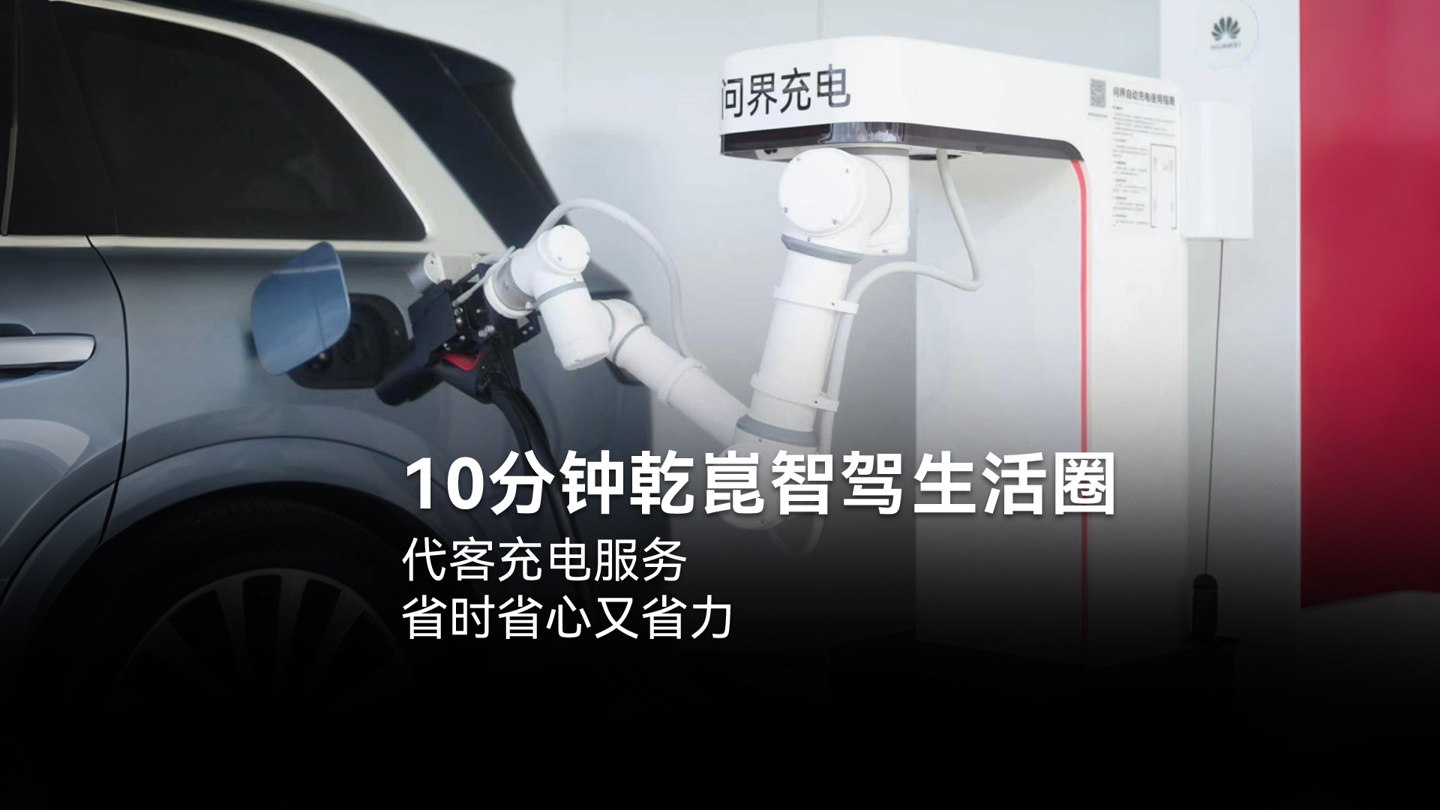
In one sentence: Huawei released a “valet charging” demo video for Qiankun ADS on Aug 8: after a one-tap command in the Huawei Qiankun app, the vehicle uses ADS to autonomously navigate the parking lot to an open charging bay, the charging-port cover opens automatically, a robotic arm visually locates and plugs in the gun, and after a full charge the arm unplugs itself and the vehicle drives itself to a designated waiting spot.
💡 Why it matters: This is the “10-Minute Qiankun Smart-Driving Ecosystem” plan (announced Apr 23, 2026) made concrete: parking payment, automatic charging and car washing are being stitched into a closed-loop service. The robotic arm’s auto-plug is not about saving a few steps — it makes the refueling link completely human-free. When the car finds its own bay, the arm plugs itself, and the system settles payments invisibly, charging requires no human at all. For robotics, this is another example of arms leaving the factory for consumer infrastructure; for autonomous driving, valet charging is the most easily validated value-added service after L3.
Key facts:
- Full flow: One-tap app command → vehicle autonomously navigates to an open charging bay → charging-port cover opens → robotic arm visually locates and connects the gun → system syncs battery level and estimated full-charge time → invisible auto settlement → arm unplugs and returns after full charge → vehicle drives itself to a designated spot
- Ecosystem plan: Part of the “10-Minute Qiankun Smart-Driving Ecosystem,” proposed Apr 23, 2026 alongside ADS 5
- Rollout targets: Q2 2026 — parking-payment service supporting 300,000 lots; 1.8M+ charging piles mapped; 3,000+ car-wash shops supporting online booking and human valet washing
- Scale base: As of Jul 16, Qiankun ADS partners with 25+ brands and 50+ models; total installations surpassed 1.9 million vehicles
- Official caveat: Huawei notes the demo “only illustrates possible future scenarios and is not a commercial commitment”
📌 Takeaway: Huawei has scripted a complete “unattended refueling” story — car, pile, robotic arm and payment system each doing its job. The logic is clear: use ADS to cut the human cost of charging, use the robotic arm to cover the one step that still needs hands (plugging in), and turn charging into an unattended service. For the industry, this is both a template for autonomous-driving value-added services and another piece of the puzzle of arms moving from factories into consumer infrastructure — the refueling scenario is becoming a new battleground for embodied intelligence.
🔗 ITHome: Huawei Qiankun ADS valet charging outlook
3. 🏫 Hubei’s First Unitree Industry College Founded: Unitree × Vocational College, Dual-Dean Structure Targets Urgently Needed Debugging/Maintenance Roles
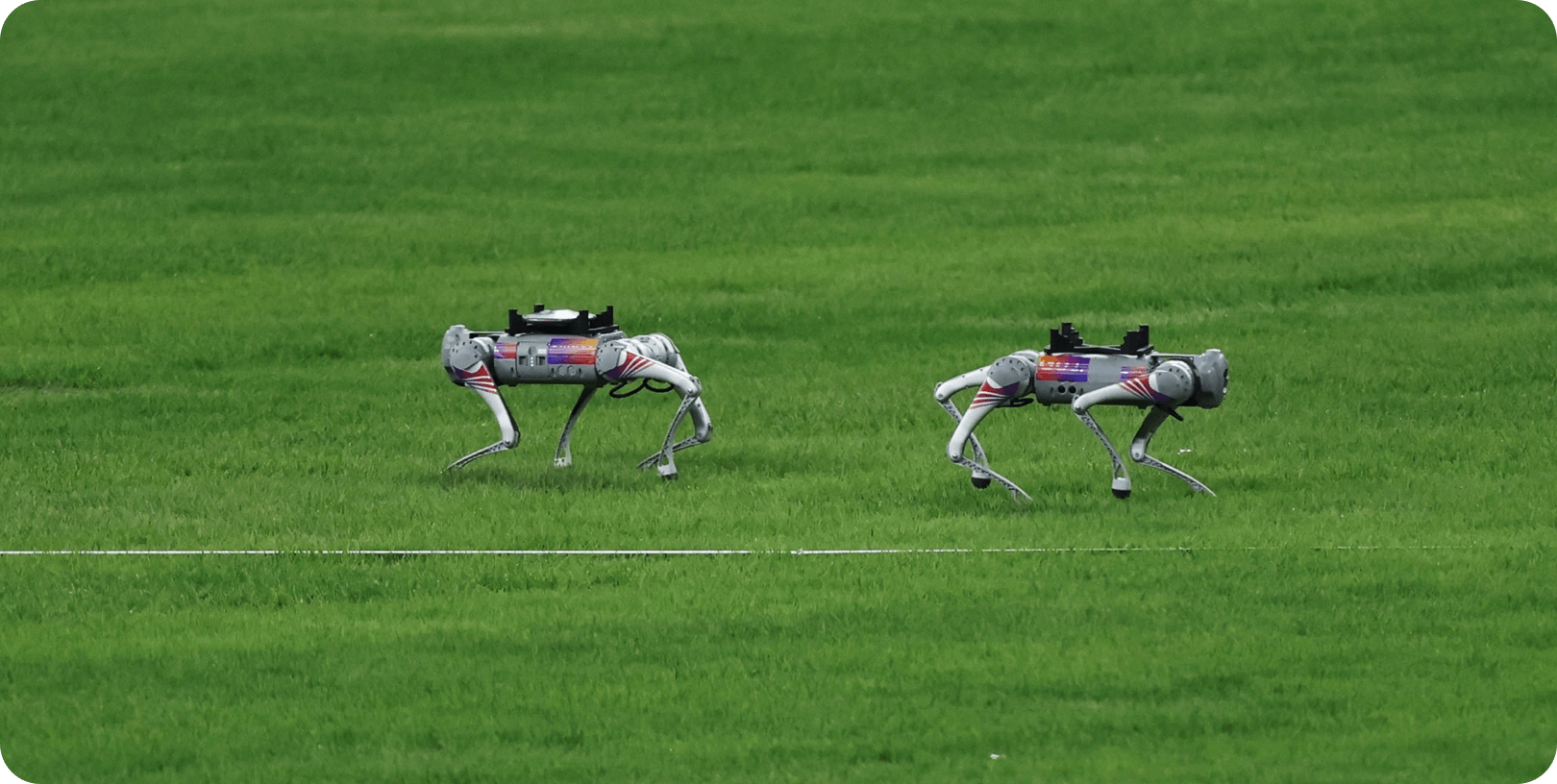
In one sentence: On Aug 7, Hubei province’s first Unitree Industry College was founded at Changjiang Engineering Vocational College, co-built by Unitree Robotics and the college under a “dual-dean” structure (an industry expert as dean, a college professor as executive vice dean), focusing on cultivating talent for urgently needed market roles in robot debugging, maintenance and technical support.
💡 Why it matters: Right after its IPO pricing landed (¥150.80/share, ~¥61B market value), Unitree moved into talent development — not a prestigious university joint lab, but an industry college inside a vocational school. The signal is clear: the humanoid industry doesn’t just lack scientists and algorithm engineers; it lacks “hands-on” engineering talent in debugging, maintenance and support. When a leader starts mass-training frontline engineers, the industry is moving from storytelling to scaling production and building service networks — talent infrastructure is the prerequisite for capacity infrastructure.
Key facts:
- Founded: Aug 7; first of its kind in Hubei province
- Partners: Unitree Robotics Co., Ltd. × Changjiang Engineering Vocational College
- Structure: Dual-dean management — industry expert as dean, college professor as executive vice dean
- Focus: Robot debugging, maintenance, technical support — roles in short supply in the market
- Context: Unitree’s IPO online subscription opens Aug 10; Q1 2026 revenue ~¥423M, +68.49% YoY
📌 Takeaway: The Unitree Industry College extends the “Unitree ecosystem” beyond capital — orders for talent, talent for service, service for reputation. For the sector, it is a footnote to humanoids moving from “geek toy” to “scaled industry”: when a leader builds a college for frontline maintenance roles, after-sales service has become a competitive dimension. Expect more robot makers to follow with “industry college + order-class” models as shipment volumes climb — the talent war is moving earlier, from campus recruiting to vocational education.
🔗 36Kr: Hubei’s first Unitree Industry College founded | Hubei Daily
4. ⚡ Sungrow on FCC: Policy Mainly Hits New Certifications; Already-Certified US Products Unaffected
In one sentence: Sungrow said on Aug 8 on an investor platform that its preliminary reading is that the FCC policy mainly restricts new product certifications and does not affect sales of already-certified products — its solar inverters and energy-storage systems currently sold in the US are unaffected.
💡 Why it matters: This is the first clear statement from a non-robotics heavyweight since the FCC ban began to spread — and the first “boundary test” of the ban’s actual scope. Sungrow’s reading matches Unitree’s own prospectus language: existing stock is “grandfathered” by existing certifications, while new products face certification risk. When standard industrial goods like solar inverters and energy storage get pulled into the discussion, it shows the FCC ban’s radius extends far beyond robot vacuums and humanoids — into “made-in-China electronics” broadly. Geopolitical compliance is becoming a universal cost line for exporters.
Key facts:
- Sungrow’s position: FCC policy mainly restricts new certifications, does not affect sales of already-certified products; US solar inverters and energy-storage systems unaffected (Aug 8 investor platform, via Sina Finance)
- Consistent with Unitree: Unitree’s prospectus confirms in-market G1/H2/R1/Go2/B2/A2 all hold FCC certification and are unaffected, but future new models face certification risk
- Policy structure: “Grandfather existing, restrict new” — certified products keep selling; new products must re-evaluate certification and compliance costs
- Spillover signal: The ban discussion has expanded from cleaning robots to inverters, storage and other industrial categories
📌 Takeaway: Sungrow’s response draws a “risk boundary” for the market: certified products = safe zone; new products = gray zone. But that statement holds only if the FCC does not escalate — revoking existing certifications or expanding scope would erase the safe zone too. For exporters, a Sungrow-style “preliminary reading” is just the first layer of cushion; what’s really needed is supply-chain localization and multi-market hedging over the long term. The next chapter of the FCC ban depends on whether it moves from “restricting new products” to “retroactively hitting old ones.”
🔗 36Kr: Sungrow responds to FCC policy | Sina Finance
5. 🤖 Cloudflare: AI Bot Traffic Has Surpassed Humans; 1:1000 Human-to-Bot Ratio Possible in Five Years
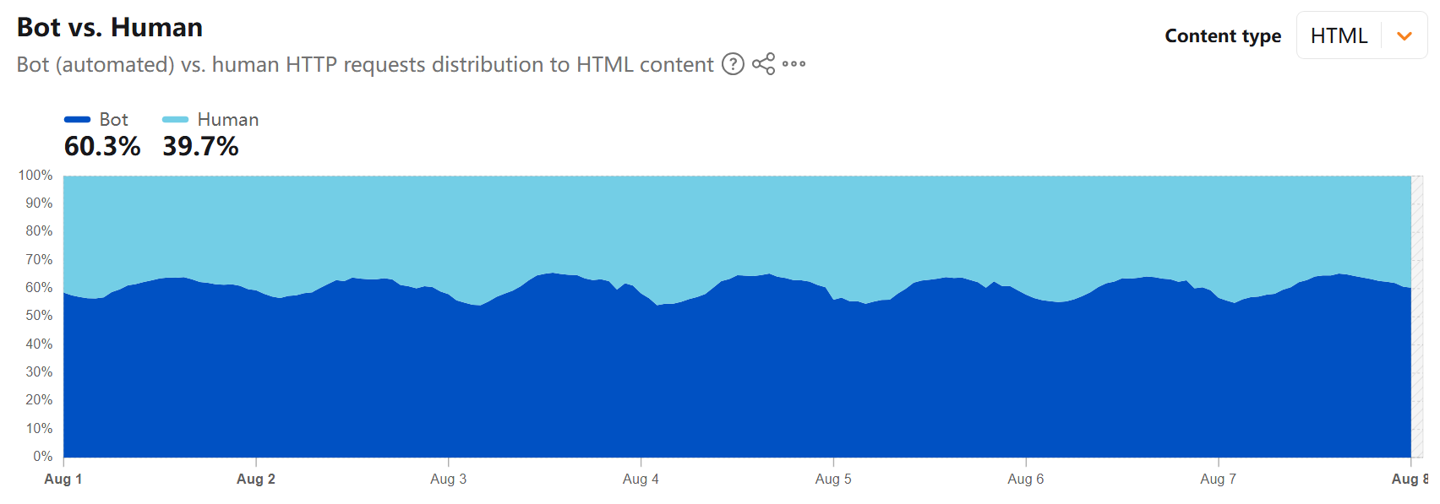
In one sentence: Cloudflare disclosed on its Q2 2026 earnings call that non-human traffic from AI bots officially overtook human traffic in May 2026 — well ahead of CEO Matthew Prince’s earlier prediction of end-2027 — and if the trend holds, non-human traffic could reach 1,000× human traffic within five years, making “humans a rounding error on the internet.”
💡 Why it matters: This is an underrated industry signal: when AI agents browse at machine speed and machine scale (a human checking cameras might visit five retailers; an AI agent might query 5,000 sites), the fundamentals of internet traffic are being rewritten. For the content industry, traffic analytics, ad billing and content production all need rethinking. For robotics observers, it is a reminder that AI’s “body” is extending from servers into the physical world — and the traffic-side “AI-ification” is only the first quantifiable part of that shift.
Key facts:
- Inflection point: May 2026 — non-human traffic officially surpassed human traffic (Cloudflare Q2 2026 earnings call)
- Forecast: Non-human traffic could reach 1,000× human traffic in five years; Prince: humans will become “a rounding error on the internet” — not because human traffic is falling, but because non-human traffic is growing too fast
- Drivers: Rise of agentic AI — highly human-like browsing behavior at machine speed and scale; some traffic is malicious (hackers, or AI companies scraping ad-reliant media content)
- Financial context: Cloudflare Q2 2026 revenue $696M, +36% YoY; net loss $205.7M (more than tripled YoY); capex planned at ~14–15% of revenue
📌 Takeaway: Cloudflare’s data turns “AI is changing the internet” from metaphor into a percentage: 60.3% vs 39.7% — the bots have already won. For content producers, this means a dual task: making content understandable to AI agents while preventing unwanted AI scraping. For robotics watchers, it is a coordinate: the day AI traffic passed human traffic is the day embodied intelligence began accelerating from the cloud into the physical world.
🔗 ITHome: Cloudflare says AI bot traffic has surpassed humans
📊 This Week’s Watchlist: Two Threads
- Athletics: the “Olympics moment” for humanoids — The 2nd World Humanoid Robot Games opens Aug 22–26 at the Ice Ribbon: 50 events, fully autonomous track races, new table tennis/boxing/dexterous-hand events; locomotion, manipulation and scenario capability tested systematically for the first time. vs. 26 events in year one — nearly doubled in a year; competition standards are becoming the industry’s capability yardstick
- Infrastructure: full-chain buildout from talent to refueling — Unitree’s Industry College targets urgently needed debugging/maintenance roles; Huawei’s valet charging pulls robotic arms into the refueling loop; leaders are no longer just competing on specs — they are building talent, service and ecosystems. Industry competition has entered an “infrastructure race”
🔭 Watch Monday: Unitree’s Aug 10 online subscription and oversubscription ratio (priced at ¥150.80/share, ~¥61B market value); Zhiyuan IPO hearing progress; Zoox’s first week of paid Las Vegas operations; further schedule and team roster details for the Humanoid Robot Games; more Chinese makers’ responses to FCC rules.
Daily Pulse by SinoBot Editorial | Data as of Aug 9, 2026 | Image credit: CCTV News, ITHome (Huawei Qiankun promo, Cloudflare earnings chart), Unitree official Dual polish pending (Gemini + ChatGPT)