Daily Pulse #60 | Aug 10 Monday Edition | Unitree opens its subscription today: A-share's 'first humanoid robot stock' priced at ¥150.80/share, ~¥61B valuation, expected allotment ratio of 2-3 in 10,000; Xiaomi forms Embodied Intelligence & Applications unit led by former ByteDance Seed embodied-intelligence lead; Musk releases Terafab render video: Optimus + Robovan in frame, $16.8B current-phase investment; 116,000 new humanoid-robot companies registered in H1; US 'robot dogs' take security posts; Hyundai launches Korea's first apartment parking-robot pilot
🎯 Monday Briefing (Aug 10)
Today’s throughline: multi-layered confirmation. Unitree officially opens its subscription — the A-share market’s “first humanoid robot stock” enters its countdown, priced at ¥150.80/share with a ~¥61B market value and an expected allotment ratio of just 2-3 in 10,000, handing pricing power over humanoids to the public markets. Xiaomi is reportedly creating an Embodied Intelligence & Applications division led by Kong Tao, former ByteDance Seed embodied-intelligence lead, folding VLA and embodied teams under one command. Musk released a Terafab render video with Optimus and the Robovan in the same frame — a $16.8B capacity blueprint finally has a concrete capex number. SAMR data shows 116,000 new humanoid-robot companies registered in H1. US “robot dogs” are taking security posts with a compelling cost equation, and Hyundai launched Korea’s first apartment parking-robot pilot — capital, organization, capacity and deployment all confirmed on the same day.
• 🏆 Unitree opens subscription today — A-share “first humanoid robot stock”; ¥150.80/share, ~¥61B market value; expected allotment ratio 2-3 in 10,000 • 🤖 Xiaomi forms Embodied Intelligence & Applications unit — Kong Tao (ex-ByteDance Seed) in charge; VLA + embodied teams unified • 🏭 Musk releases Terafab render video — Optimus + Robovan in frame; $16.8B current-phase investment • 📊 116,000 new humanoid-robot companies in H1 — +9.5% YoY; accelerating into a new growth pole • 🐕 US “robot dogs” take security posts — $80K-$130K saved per 24/7 post per year vs human guards • 🚗 Hyundai launches Korea’s first apartment parking-robot pilot — 1,796-unit complex, 53 spots, 20%-50% capacity gain
1. 🏆 Unitree Opens Subscription Today: A-Share’s “First Humanoid Robot Stock” at ¥150.80/Share, Expected Allotment Ratio of 2-3 in 10,000
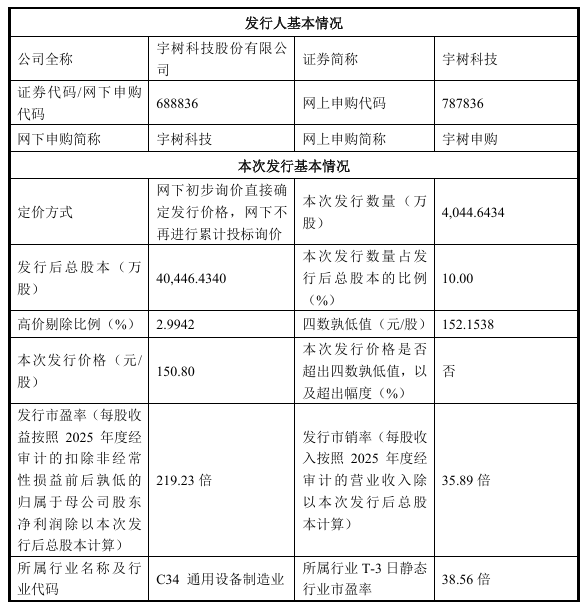
In one sentence: On Aug 10, Unitree officially opened its online and offline subscription — priced at ¥150.80 per share for a market value of ~¥60.99B, with an offering PE of 219.23x; it plans to issue 40.4464 million shares (10% of post-offering capital) for total proceeds of ~¥6.099B; broker estimates put the expected allotment ratio at 2-3 in 10,000, and based on this year’s average first-day gain of 276.04% for new A-share listings, paper gains per lot could exceed ¥200,000.
💡 Why it matters: This is the first time China’s capital market has priced a humanoid-robot hardware company. The 219.23x offering PE — far above the industry average of 38.56x — shows the market is not measuring Unitree with a “manufacturing” yardstick but with the expectations of a “platform tech company.” The most telling detail sits in the use of proceeds: the intelligent-robot-model R&D program alone is budgeted at ¥2.022B, nearly half of total proceeds — Unitree is betting its largest IPO allocation on “models,” not “hardware,” confirming in cash the industry consensus that the humanoid race is shifting from hardware specs to embodied-intelligence models.
Key facts:
- Offering terms: ¥150.80/share, market value ~¥60.99B; offering PE 219.23x (industry average 38.56x); 40.4464M shares issued, 10% of post-offering capital; total proceeds ~¥6.099B, net ~¥5.917B
- Timeline: Online and offline subscription both Aug 10; payment deadline Aug 12; one lot (500 shares) requires ¥75,400
- Expected allotment: Brokers estimate 2-3 in 10,000, far below ChangXin Technology’s 0.47%; 2026 YTD average first-day gain for new A-share listings is 276.04%
- Strategic placement: 8.089286M shares placed, including the National Social Security Fund, DeepSeek, and CNPC
- Speed record: Accepted by the SSE Mar 20, approved at hearing Jun 1, registration effective Jul 6 — 73 days end to end
- Use of proceeds: Four programs — intelligent-robot-model R&D (¥2.022B, nearly half), robot hardware R&D, new intelligent-robot product development, and intelligent-robot manufacturing base construction
- Financials: 2023-2025 revenue ¥159M / ¥393M / ¥1.699B; net profit -¥11.15M / ¥95.47M / ¥278M — one of the few profitable high-performance general-purpose robot companies globally; Q1 2026 revenue ~¥423M (+68.49%); H1 2026E revenue ¥1.052B-¥1.128B (+35.62% to +45.41% YoY)
📌 Takeaway: The Unitree subscription is the day’s most important signal for the whole industry: pricing power for the “first humanoid robot stock” is formally moving from the primary market to the public market. The 219x PE says capital is willing to pay for an “embodied-intelligence platform”; the 73-day approval says regulators are clear about this track. For the industry, Unitree’s listing matters beyond one company — it sets the valuation anchor for Zhiyuan and Deep Robotics waiting in line, and turns “humanoid robots” into a tradeable, pricable asset class on the A-share market for the first time. What to watch next: the Aug 12 payment deadline and first-day trading performance.
🔗 ITHome: Unitree opens subscription today, A-share’s “first humanoid robot stock” | ITHome: Unitree subscription: allotment ratio far below ChangXin, ~¥200K paper gain per lot
2. 🤖 Xiaomi Forms Embodied Intelligence & Applications Unit: Kong Tao, Ex-ByteDance Seed Lead, Commands VLA + Embodied Teams
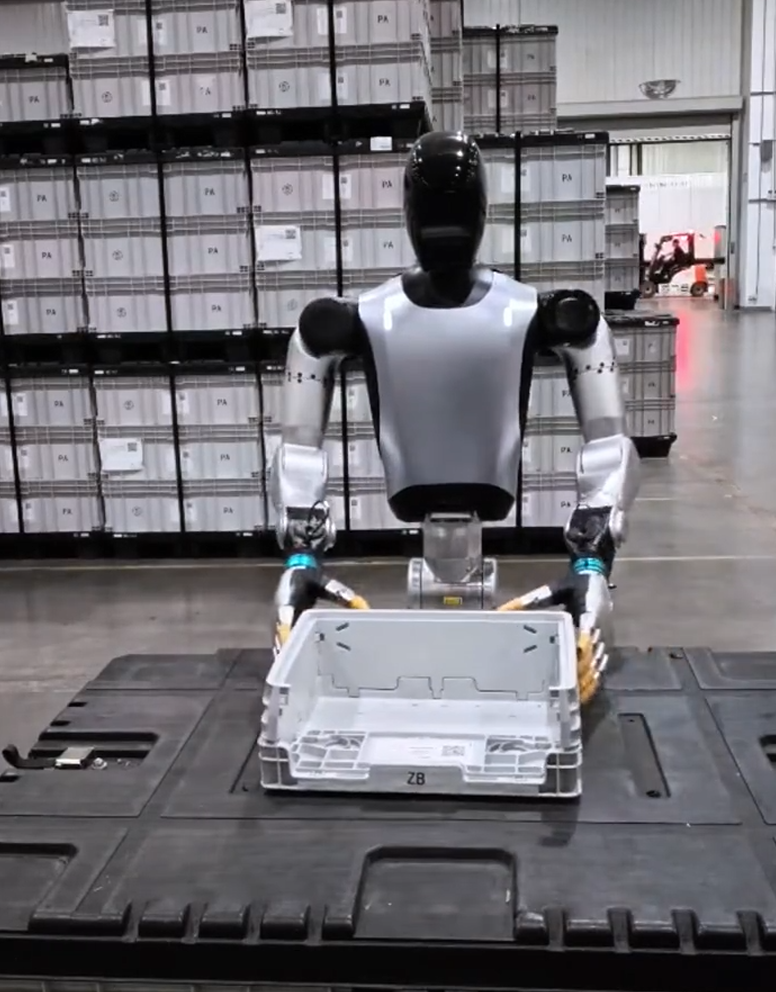
In one sentence: According to the “Big Factory Youth” WeChat account, Xiaomi’s robot business unit is undergoing a major restructuring: a new Embodied Intelligence & Applications division has been formed, led by Kong Tao (Jason Kong), former head of embodied intelligence at ByteDance Seed Robotics; the division has absorbed Chen Long’s VLA team and Cai Rui’s robot embodied-intelligence unit, and after the adjustment all of Xiaomi’s embodied-intelligence business directions report to Kong Tao.
💡 Why it matters: Xiaomi is one of the most organizationally active players running “car-making + robot-making” in parallel. The essence of this restructuring is putting the VLA (vision-language-action) team and the embodied-hardware team under one command system — algorithm and hardware teams shift from “collaboration” to “subordination.” Kong Tao, former head of embodied intelligence at ByteDance Seed Robotics, joined Xiaomi to lead foundational embodied models for robots, and reportedly received a “far exceeded expectations” review at a recent internal meeting. Putting a model scientist in charge of the entire embodied track signals Xiaomi’s read aligns with Unitree’s IPO allocation: the winning move in embodied intelligence is at the model layer.
Key facts:
- New division: Embodied Intelligence & Applications, led by Kong Tao; absorbs Chen Long’s VLA team and Cai Rui’s robot embodied-intelligence unit
- Scope: After the adjustment, all of Xiaomi’s embodied-intelligence business directions report to Kong Tao
- Kong Tao’s background: Former head of embodied intelligence at ByteDance Seed Robotics; joined Xiaomi to lead foundational embodied robot models; “far exceeded expectations” review at a recent internal meeting
- Factory progress: Early this year, Xiaomi robots began “internship” at the self-tapping-nut loading station in Xiaomi’s car factory; in March, ran autonomously for 3 hours in a real car factory with a 90.2% dual-side simultaneous installation success rate, meeting the fastest 76-second line takt; by July, success rate climbed to 98% — within 1% of human worker pass rates — officially “converting to full-time”
- New stations: Robots opened new “internship” posts — center-console side-cover sorting and bin folding/recycling in the assembly plant logistics area, both reaching 90% success
📌 Takeaway: Xiaomi’s restructuring elevates “embodied intelligence” from technical exploration to a strategic main line. Kong Tao commanding both VLA and embodied teams means Xiaomi is pursuing integrated “model-hardware-scenario” iteration — echoing Unitree’s decision to pour most of its IPO proceeds into model R&D. Combined with the factory curve from 90.2% to 98%, Xiaomi’s path is now clear: use its own factory as a training ground, grind success rates to near-human levels, then replicate to external scenarios. The organizational war in humanoids has reached the level of who unifies command over algorithms and hardware.
🔗 ITHome: Report: Xiaomi forms Embodied Intelligence & Applications unit, Kong Tao in charge
3. 🏭 Musk Releases Terafab Render Video: Optimus and Robovan in the Same Frame, $16.8B Current-Phase Investment
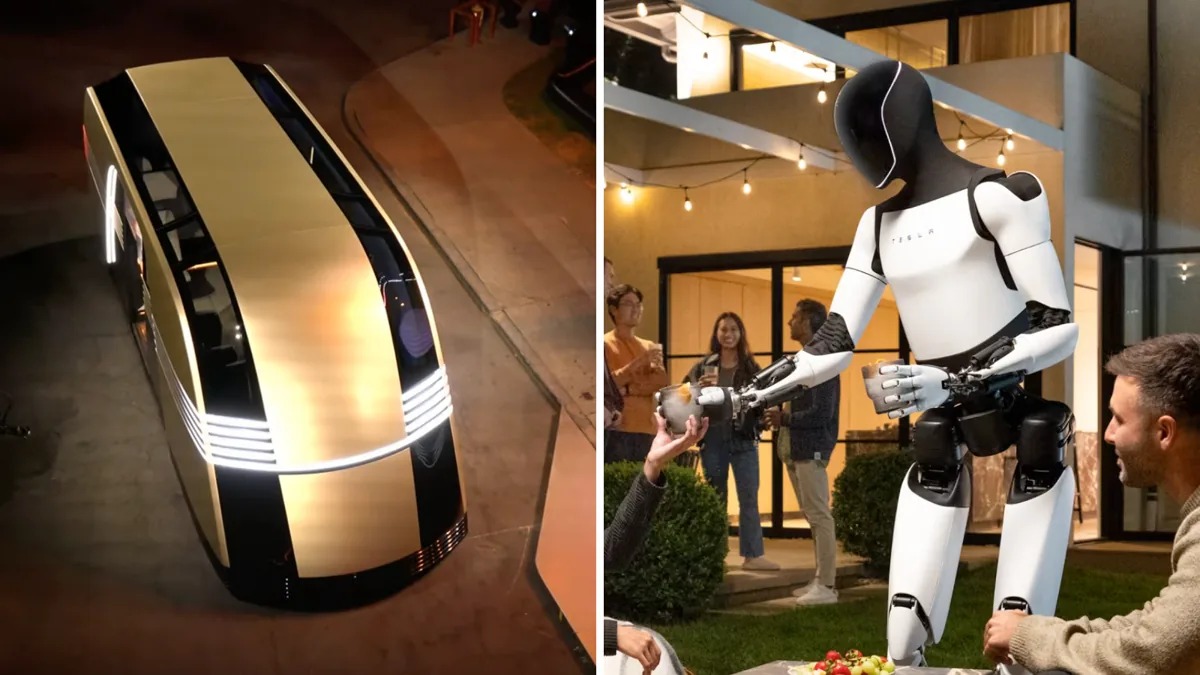
In one sentence: Musk posted a Terafab render video on X on the morning of Aug 7: inside the planned mega-facility on the Gibbons Creek site in Grimes County, Texas — roughly 2.5 miles (4 km) long — an Optimus humanoid is working while a Robovan travels along an elevated road inside the plant, flanked by a Tesla Semi and a Cybercab; per Reuters, the current construction phase represents a $16.8B investment (¥113.65B).
💡 Why it matters: The information in this render video sits beyond the building itself — two products that have yet to reach mass production (Optimus and the Robovan) are placed in the same “factory of the future” narrative. Optimus is further along: Tesla has converted the Fremont line formerly used for Model S/X into a Gen-3 Optimus production line (Musk visited on Jul 1 to witness the conversion), and a second, larger Optimus factory at Giga Texas targets mass production by summer 2027, eventually reaching 10 million units per year. The Robovan still has no production timeline — like the Cybercab it has no steering wheel or pedals, carries up to 20 passengers, and is projected to cost under $1 per mile to operate. The $16.8B figure is also the first concrete capex number for Terafab since the project was announced in March.
Key facts:
- Site & scale: Gibbons Creek, Grimes County, Texas; ~2.5 miles (
4 km) long; current construction phase $16.8B (¥113.65B) - In frame: Optimus working in the facility; Robovan on an elevated internal road; Tesla Semi and Cybercab alongside
- Robovan: Unveiled at the Oct 2024 “We, Robot” event alongside Cybercab; boxy driverless passenger/cargo vehicle, up to 20 passengers; projected <$1/mile operating cost; no steering wheel or pedals; still no production timeline
- Optimus progress: Fremont Model S/X line converted to Gen-3 Optimus line (Musk witnessed conversion Jul 1); second, larger Optimus factory at Giga Texas targeting mass production summer 2027, eventually 10M units/year capacity
- Price expectation: Musk projects long-term Optimus pricing of $20K-$30K (~¥135K-¥203K)
- Landing progress: Terafab tax-abatement agreement with Grimes County is now in effect; SpaceX has made its first $10M payment (~¥67.65M)
📌 Takeaway: Musk frames Terafab as “the largest and most valuable building on Earth,” but the number worth watching is Optimus capacity — mass production by summer 2027, eventually 10 million units a year, the most aggressive capacity target in the global humanoid industry today. The $16.8B construction investment, the Fremont line conversion and the new Texas plant all say Tesla is moving Optimus from “demo piece” to “scale manufacturing.” When Musk puts Optimus and the Robovan into the same factory narrative, Tesla’s ambition is no longer just building robots — it is rebuilding an ecosystem of robot + driverless-vehicle manufacturing and mobility.
🔗 ITHome: Musk releases Terafab render video: Optimus and Robovan in frame
4. 📊 116,000 New Humanoid-Robot Companies Registered in H1, +9.5% YoY: Future Industries Accelerate
In one sentence: Per CCTV News on Aug 8 citing SAMR data, 561,000 companies related to “8 emerging industries + 9 future industries” were newly registered in H1 2026; among them, 116,000 new humanoid-robot companies were registered, up 9.5% YoY, accelerating into a new economic growth pole.
💡 Why it matters: The reference frame for 116,000 matters — in the same period, generative-AI saw 55,000 new companies (+28.0%), meaning humanoid robots registered more than twice as many. Among the “9 future industries,” humanoids are already one of the most crowded tracks. The flip side of the surge is competition intensity: while Unitree opens its subscription at a 219x PE and capital concentrates toward leaders, 116,000 new registrations means the industry is in a phase of “many boats racing” and shakeout running in parallel — registration barriers are low, mass-production barriers are high, and only a small minority will likely survive.
Key facts:
- Total: 561,000 companies tied to “8 emerging industries + 9 future industries” newly registered in H1
- Humanoid robots: 116,000 new companies, +9.5% YoY
- Comparisons: Generative AI 55,000 new companies (+28.0%); brain-computer interfaces, quantum information and the metaverse also grew
- Upgrading industries: High-end equipment manufacturing 28,000 new companies (+2.5%), with intelligent equipment manufacturing +6.4%; high-tech manufacturing reached 330,000 companies total, 15,000 newly registered in H1 (spacecraft/launch vehicles +185.7%, fiber optics/cables +129.4%, integrated circuits +24.2%)
- Parallel shakeout: Overcapacity industries are clearing out — NEV, solar and battery companies deregistered 7,632, 5,089 and 155 respectively in H1
📌 Takeaway: 116,000 new registrations is the registration-side evidence that humanoids are moving “from concept to industry.” But read the number soberly: registered companies do not equal effective capacity. As Unitree and Zhiyuan begin IPOs and land large orders, resources are concentrating toward leaders, and the high growth in new registrations mostly reflects the “breadth of industry heat,” not the “depth of competitive moats.” The real question for future industries is how many of these companies go from “registration” to “mass production.”
🔗 ITHome: 116,000 new humanoid-robot companies registered in H1 2026, +9.5%
5. 🐕 US “Robot Dogs” Take Security Posts: $80K-$130K Saved per 24/7 Post per Year vs Human Guards
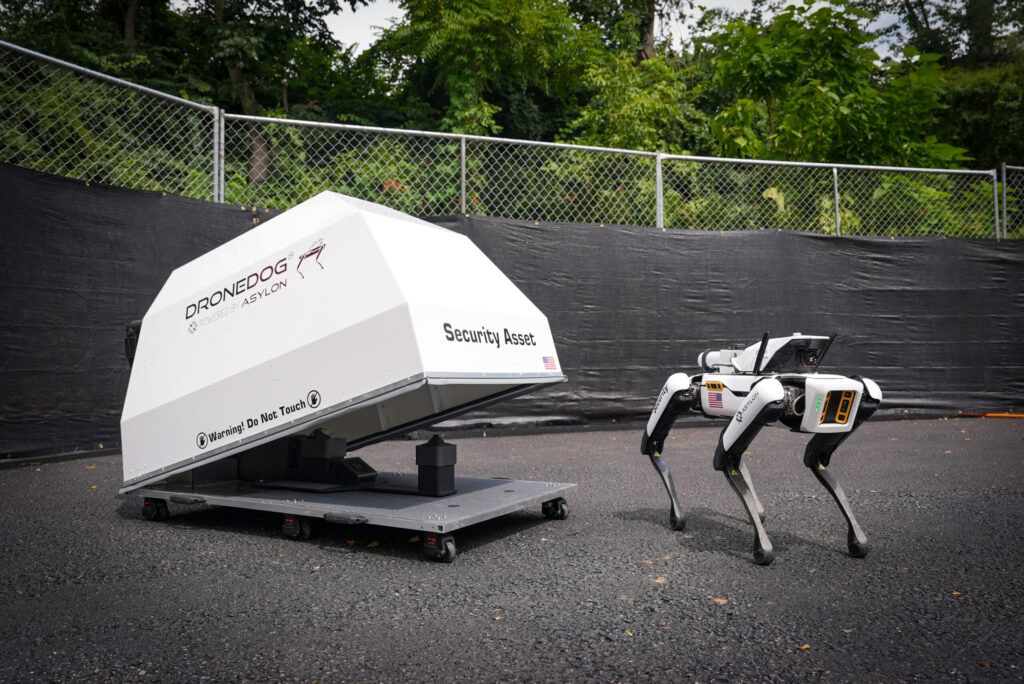
In one sentence: In the US, robot dogs are already patrolling data centers, guarding high-value crops and handling security at sports venues; per Business Insider, staffing a 24/7 post with a robot dog saves $80,000-$130,000 (¥541K-¥879K) per year versus hiring a human guard.
💡 Why it matters: This is a blunt cost equation: robot dogs are not cheap upfront, but around-the-clock operating costs have already fallen below human labor. For roughly 1.3 million US security guards, that is real employment pressure — the security industry has long been a low-barrier job providing income for less-educated workers; the 2024 median guard salary was about $38,390, and low pay and stress drive chronic turnover, which tech companies are now filling with automation. Robot-dog maker Asylon has deployed about 50 robots across 25 US customers.
Key facts:
- Cost comparison: A 24/7 post staffed by a robot dog saves $80K-$130K per year vs a human guard (¥541K-¥879K)
- Employment scale: ~1.3 million US security guards; 2024 median salary
$38,390 (¥260K) - Workforce profile: UC Berkeley Labor Center data — ~60.8% of guards are people of color; 27.8% are 55 or older
- Deployment status: Asylon has ~50 robots across 25 US customers; robot dogs now patrol data centers, guard high-value crops and handle stadium security
- Industry view: Berkeley Labor Center experts argue the security industry is more likely to replay how other jobs met automation — headcount may not go to zero, but remaining work will be harder and riskier
📌 Takeaway: The robot-dog security ledger is clear — $80K to $130K saved per 24/7 post per year is an ROI commercial buyers can hardly refuse. When automation moves from “can it do the job” to “it costs less,” structural contraction in low-barrier jobs begins. What deserves attention is the researchers’ read: in the near term, the more realistic outcome is not guards replaced by machines but human guards pushed into the hardest, most responsibility-heavy roles — the same path manufacturing workers took when robots displaced them into higher-skill jobs. Robot dogs are not guarding a single facility; they are another beachhead of automation penetrating the service sector.
🔗 ITHome: US “robot dog” security guards take posts, saving $80K-$130K per year vs humans
6. 🚗 Hyundai Launches Korea’s First Apartment Parking-Robot Pilot: 53 Spots, 20%-50% Capacity Gain
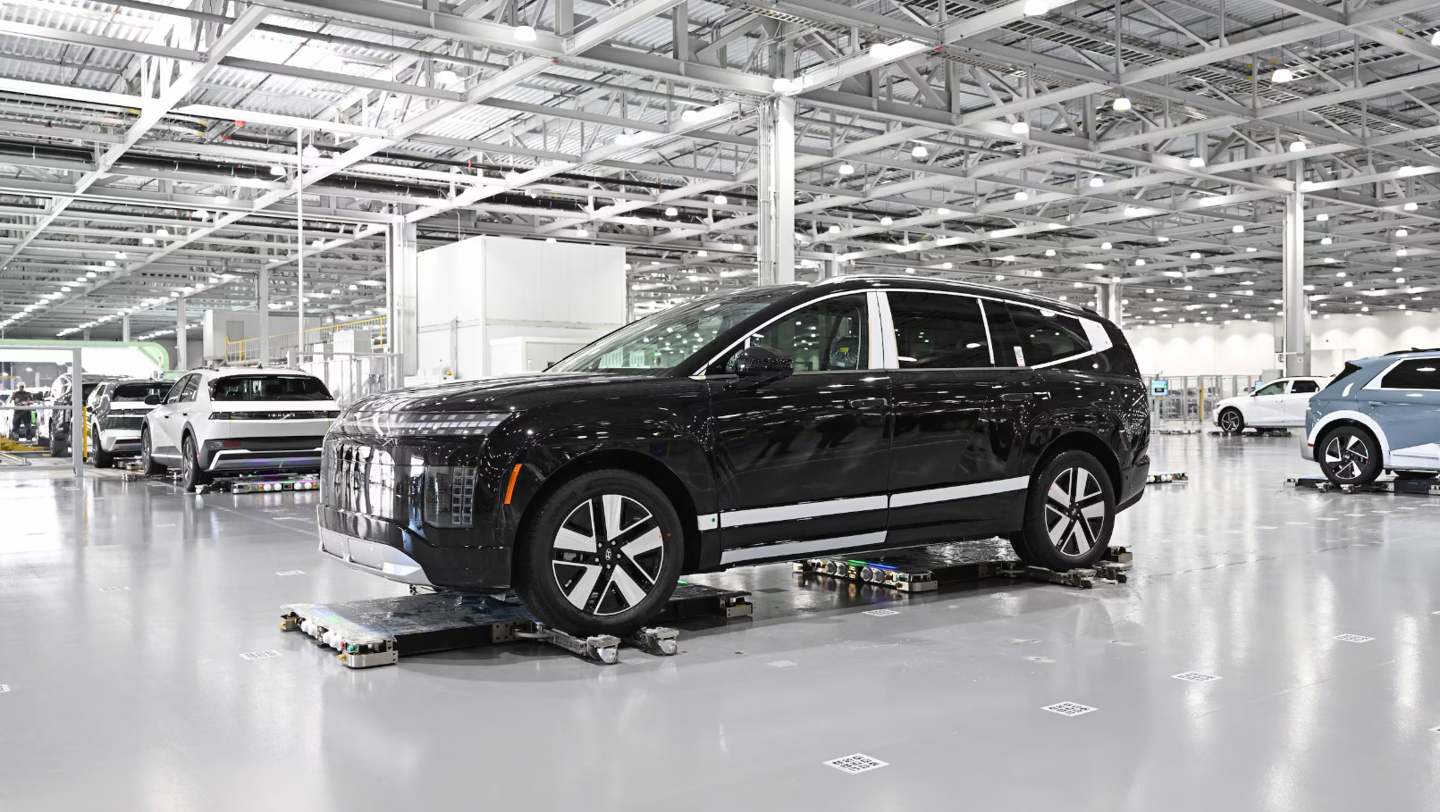
In one sentence: The Hyundai Motor Group consortium announced on Aug 10 that it will run a parking-robot pilot at the Hillstate The Wave City multi-family complex (1,796 units) in Siheung, Gyeonggi Province — a smart pilot under South Korea’s Ministry of Land, Infrastructure and Transport smart-city regulatory sandbox, using two Hyundai WIA automatic parking robots across 53 basement-level parking spots.
💡 Why it matters: This is Hyundai’s first apartment-building parking-robot project in Korea and a signal that parking robots are moving from “airports and malls” into “residential scenarios.” Hyundai WIA’s parking robot consists of a pair of slim, wide-bodied robots just 110mm thick that slide under the vehicle, lift the wheels and move it, using LiDAR to precisely identify wheel size and position; it parks at up to 1.2 m/s and handles vehicles up to 3.4 tons, including SUVs. Hyundai projects the parking-robot system can lift lot capacity by 20% to 50%.
Key facts:
- Project: Hillstate The Wave City, Siheung, Gyeonggi Province; 1,796 units, opening next year; pilot zone in a dedicated basement area with 53 spots and two Hyundai WIA automatic parking robots
- How it works: Driver parks in a designated drop-off zone; robot identifies the vehicle and moves it to an open spot; vehicles can be summoned via kiosk or wall-mounted buttons in the apartment
- Tech specs: A pair of 110mm-thick slim wide-bodied robots; LiDAR identifies wheel size/position; max parking speed 1.2 m/s; max vehicle weight 3.4 tons (incl. SUVs)
- Capacity gain: Projected 20% more vehicles at minimum, up to 50%; also cuts hunting time, avoids engine idling, and separates vehicle/pedestrian paths to reduce accident risk
- Pilot goals: Measure per-vehicle in/out time, user wait time, parking success rate, robot uptime, monthly task count and lot-efficiency gains; then help refine parking-robot laws and build virtual models of lot layouts for various facility types
- China reference: Beijing Daxing International Airport’s AGV parking robots, in operation since 2019, already solved “hard to find spots, hard to park” pain points
📌 Takeaway: Parking-robot commercialization is moving from “airport showcase” to “community standard”: Hyundai put it inside the smart-city regulatory sandbox, backed it with national funding and is simultaneously pushing legal refinement — a classic “technology first, institutions follow” path. The 20%-50% capacity gain means that in land-scarce residential areas, parking robots do more than save labor — they “create” spots. When this high-frequency, must-do scenario gets taken over by robots, the intersection of low-speed autonomy and robotics is becoming one of the fastest areas for embodied intelligence to land.
🔗 ITHome: Hyundai launches Korea’s first apartment parking-robot pilot
📊 This Week’s Watchlist: Capital Pricing, Organizational Integration, Scenario Deployment
- Capital: humanoids enter the public-market pricing era — Unitree subscribes Aug 10 and pays Aug 12; first-day performance will test the “content” of the 219x PE; Zhiyuan’s IPO progress and valuation anchors for later listings (Deep Robotics, etc.) will reference Unitree’s pricing
- Organization: leaders accelerate “algorithm + hardware” integration — Xiaomi’s new Embodied Intelligence & Applications division unifies VLA and embodied teams; Tesla runs Fremont line conversion and the new Texas plant in parallel — dual integration of organization and capacity
- Scenario: robots penetrate services and residential settings — US robot-dog guards take posts; Hyundai’s parking robots enter apartment buildings; robots’ “job market” is expanding from factories into security, parking and other services
🔭 Watch tomorrow: Unitree subscription results and final allotment ratio (expected 2-3 in 10,000); Aug 12 payment deadline; Tesla Fremont Optimus line conversion progress; Xiaomi robot factory new-station success rates; Zhiyuan IPO hearing updates.
Daily Pulse by SinoBot Editorial | Data as of Aug 10, 2026 | Image credit: ITHome (Unitree offering announcement, Xiaomi, Terafab render, Asylon, Hyundai) Dual polish pending (Gemini + ChatGPT)