Daily Pulse #61 | Aug 11 Tuesday Edition | Zhiyuan tops global humanoid shipments with 44% share, Chinese makers deliver 97%+ of all humanoids in H1: ~19,100 units shipped globally, more than tripled YoY; Unitree's final online allotment ratio hits 0.0181%; Figure, 1X, Weave, Sunday — robot startups worth billions — pile into folding laundry as the gateway to real homes
🎯 Tuesday Briefing (Aug 11)
Today’s throughline: a reshuffled pecking order, and commercialization at the doorstep. Zhiyuan shipped 8,400 humanoids in H1, taking a 44% global share to overtake Unitree for the first time as the world’s No.1; Chinese makers together claimed more than 97% of global shipments — the clearest picture yet of China’s two leaders running ahead while US rivals fall behind. Unitree disclosed a final online allotment ratio of 0.01809759%, with demand even hotter than broker estimates. And Figure AI, 1X, Weave and Sunday — startups with billions in funding — are collectively betting on folding laundry, a chore with low failure cost and a fixed workspace, as the wedge into real homes. Home robots are moving from “show” to “use.”
• 🏆 Zhiyuan tops global shipments — 8,400 units, 44% share in H1, overtaking Unitree (5,900); Chinese makers take 97%+ of the world • 📰 Unitree’s allotment ratio revealed — 0.01809759% final online ratio, roughly 1.8 in 10,000; demand beats expectations • 🧺 Billion-dollar robot startups pile into folding laundry — Figure/1X/Weave/Sunday target the home; real-family tests start this fall • 📊 19,100 units shipped globally — more than tripled YoY; SAG sees 60,000 for 2026, 500,000 by 2030
1. 🏆 Zhiyuan Tops Global Humanoid Shipments: 8,400 Units and a 44% Share in H1, as Chinese Makers Take 97%+ of the World
In one sentence: According to SAG (Smart Analytics Global) data cited by Bloomberg, global humanoid-robot shipments reached ~19,100 units in H1 2026, more than tripling from 5,100 units a year earlier; Zhiyuan shipped 8,400 units for a 44% global share, overtaking Unitree (5,900 units) for the first time to top the ranking, while Chinese makers together contributed more than 97% of worldwide shipments — leaving Tesla, Figure AI and Agility Robotics far behind.
💡 Why it matters: This is the first time the global humanoid industry has seen such a clear “China duopoly at the top.” Zhiyuan and Unitree together shipped 14,300 units — roughly 75% of global volume — and each of them alone outsells the leading US makers by an order of magnitude. The structural shift matters even more: SAG founder Linda Sui notes that industrial and commercial applications now account for more than 70% of shipments, up from only about 50% a year ago — humanoids are becoming capital goods that customers actually buy, not exhibits. China’s lead isn’t just production capacity; it’s speed to real-world deployment.
Key facts:
- Global market: ~19,100 units shipped in H1 2026 vs 5,100 a year earlier — more than tripled YoY
- Zhiyuan takes No.1: 8,400 units in H1, 44% global share, overtaking Unitree for the first time
- Unitree No.2: 5,900 units in the same period, roughly 31% share
- China’s share: Chinese makers delivered 97%+ of all humanoids globally; MIIT data: China holds ~70% of global quadruped sales and 400+ humanoid models (over half the world’s total)
- Full-year outlook: SAG projects ~60,000 units for 2026 and 500,000 by 2030
- Application mix: Industrial & commercial applications are 70%+ of shipments (vs ~50% a year ago); dozens of makers showcased dexterity, speed and feature progress at WAIC last month
📌 Takeaway: The crown passed from Unitree to Zhiyuan, but the number that matters is 97% — this isn’t one company’s win, it’s the collective advantage of the entire Chinese supply chain. Zhiyuan topped the chart on 8,400 units shipped through rapid industrial deployment; Unitree is raising capital via IPO to reload. Different routes, same direction: turning shipment counts into installed real-world capacity. Watch for: whether the 60,000-unit full-year forecast holds, and whether Tesla’s Optimus ramp creates a second supply pole outside China.
🔗 IT之家: Chinese makers delivered 97%+ of global humanoids in H1; Zhiyuan and Unitree take top two | Bloomberg via IT之家
2. 📰 Unitree’s Final Online Allotment Ratio: 0.0181% — Demand Hotter Than Expected
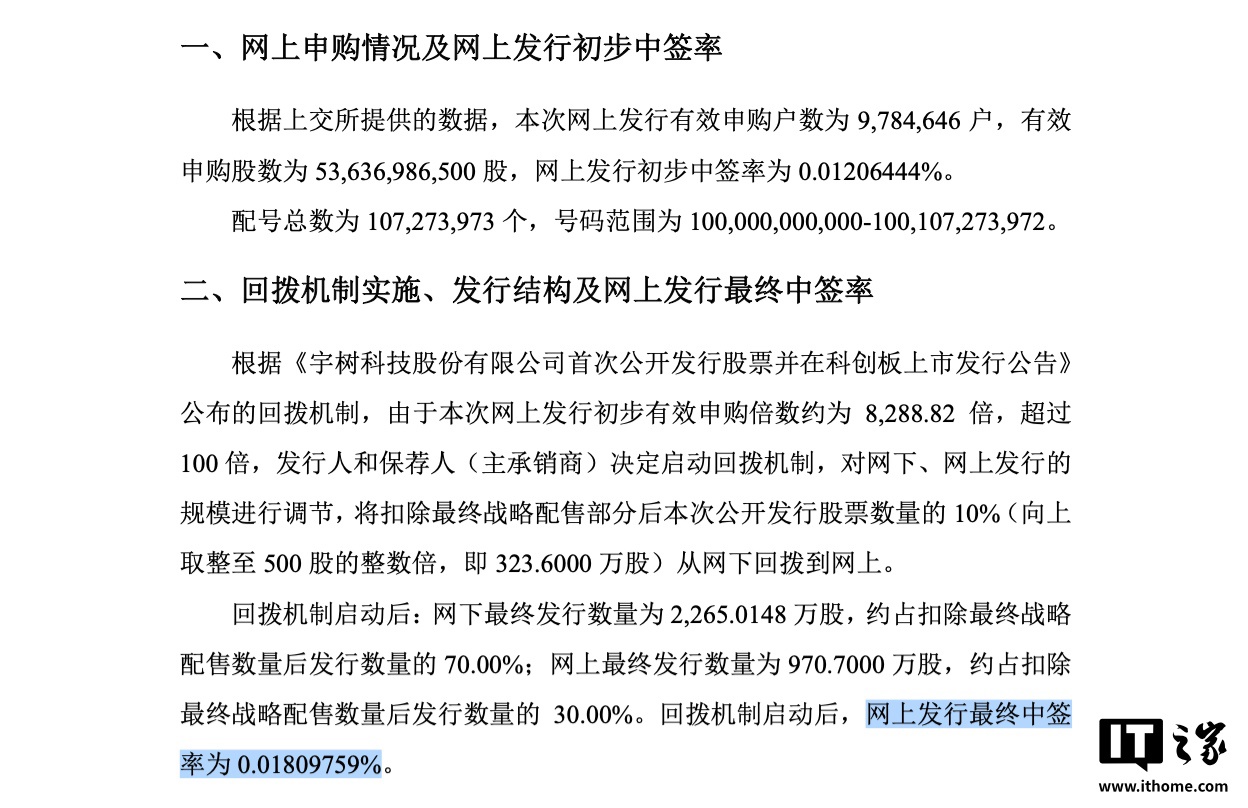
In one sentence: On the evening of Aug 10, Unitree disclosed its STAR Market IPO online subscription results: priced at ¥150.80/share, with 9.707 million shares allocated to online investors after the clawback mechanism, the final online allotment ratio came in at 0.01809759% — even lower than the 2-3 in 10,000 broker estimates, confirming demand above expectations.
📌 In short: A 0.0181% allotment ratio means roughly 1 winner per 5,500 subscription units — the market has voted with its feet on the scarcity of the A-share market’s “first humanoid robot stock.”
Key facts:
- Allotment ratio: 0.01809759% final online ratio; 9.707 million online shares, ~30.00% of post-strategic-allocation offering
- Offering size: ¥150.80/share; 40.446434 million shares; total market value above ¥60B
- Use of proceeds: ¥2.022B for intelligent-robot-model R&D (nearly half), plus robot-body R&D, new product development and manufacturing base construction
- Financials: Revenue ¥159M/¥393M/¥1.699B (2023-2025); net profit -¥11.1M/¥95.5M/¥278M; Q1 2026 revenue ~¥423M (+68.49%); H1 2026 revenue expected ¥1.052B-¥1.128B (+35.62%-45.41%)
💡 Context: The ratio came in below broker estimates, showing subscription demand for the “first humanoid robot stock” ran hotter than modeled. With strategic placement backers including DeepSeek, the Social Security Fund and CNPC, Unitree’s first-day trading will anchor sentiment for the whole sector. For the industry, Unitree’s pricing is not just one company’s valuation — it is the first complete public-market pricing of humanoids as an asset class on the A-share market.
🔗 IT之家: Unitree opens subscription; final online allotment ratio ~0.0181%
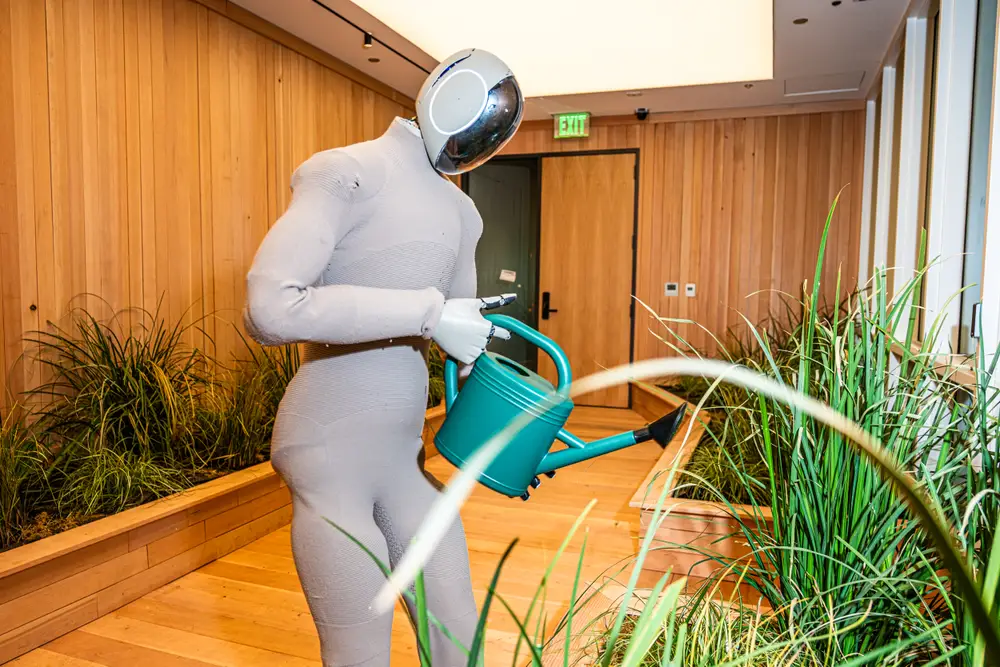
3. 🧺 Why Billion-Dollar Robot Startups Are Piling into Folding Laundry: Figure, 1X, Weave and Sunday Bet on the Chore with the Lowest Failure Cost
In one sentence: According to Business Insider, a wave of robot startups with billions in combined funding — Figure AI, Sunday Robotics, Weave Robotics and 1X — are making folding laundry their wedge into real homes: clothes are “deformable objects” that demand serious perception and dexterity, yet folding has an extremely low failure cost, making it a relatively safe proving ground for home robots.
💡 Why it matters: Folding laundry looks trivial but is widely regarded as a dexterity benchmark — Figure has called it one of the hardest manipulation tasks for humanoids. Recognizing a limp pile of fabric, grasping, unfolding and folding it tests perception and control at the limit. And the home is the “ultimate unstructured environment” (Columbia professor Matei Ciocarlie), where confining the robot to a fixed folding zone sidesteps the hardest part of whole-home navigation. The deeper prize is data: unlike LLMs trained on oceans of internet text, robots lack comparable physical-world training data — real homes are the missing dataset for general manipulation models.
Key facts:
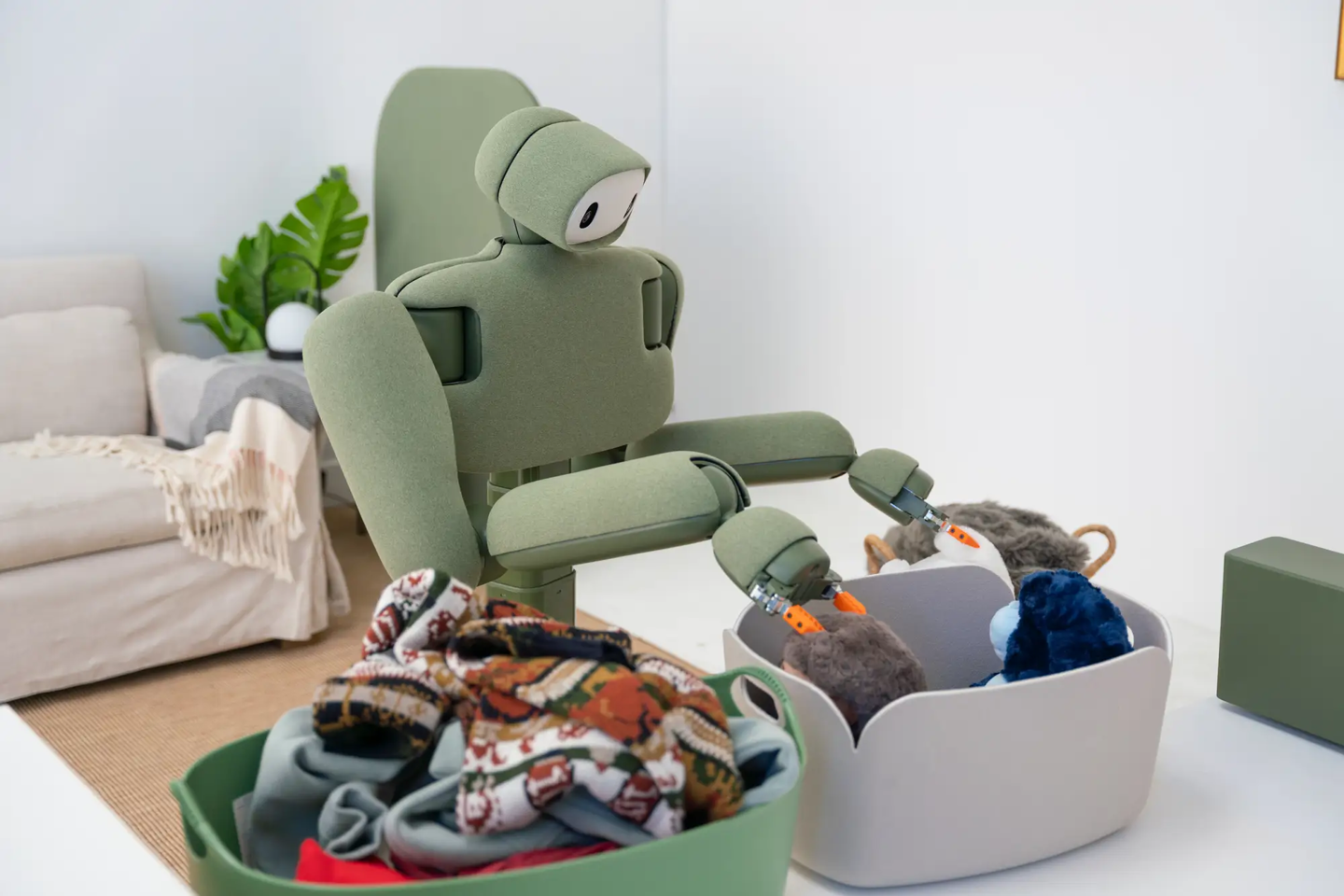
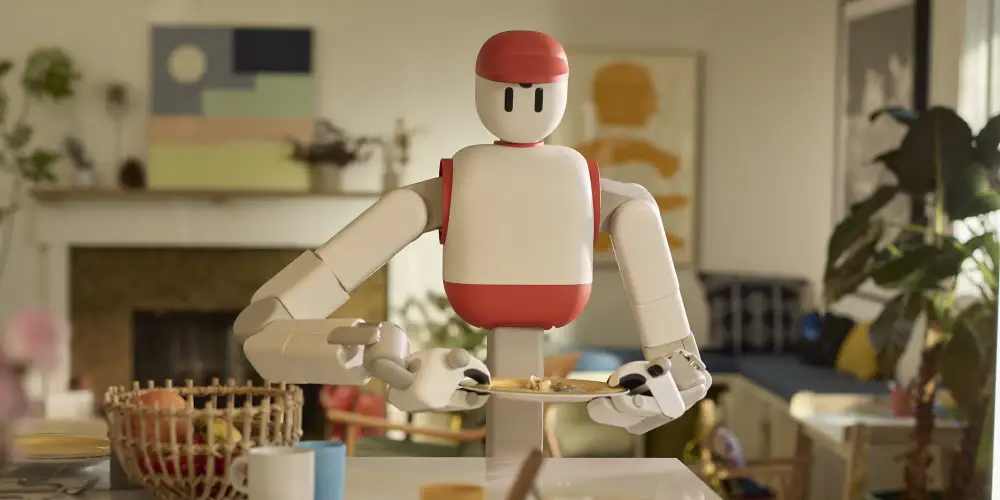
- The lineup: Figure AI, Weave Robotics (Isaac 1, $8,000 retail or $449/month subscription), Sunday Robotics (Memo), 1X (NEO humanoid); billions in combined funding
- Low failure cost: Robotics expert Ayanna Howard notes a dropped garment rarely causes damage — a safe testing entry point
- History as warning: Japan’s Laundroid sold at $16,000 (~¥108K) yet its parent filed for bankruptcy in 2019; FoldiMate showed at CES repeatedly but never shipped — cost and reliability killed earlier attempts
- Timeline: Sunday plans to place robots in homes via a pilot program this fall; Weave and 1X expect deliveries later this year
- Data collection: Sunday uses sensor-equipped gloves (
$200/¥1,350) to capture human daily-task data; real-home data covers edge cases labs can’t simulate - Expanding skillsets: Sunday’s AI is also learning vacuuming, toy tidying, zippers and making coffee; 1X wants NEO to fold laundry, stock shelves and tidy rooms
📌 Takeaway: From Laundroid’s bankruptcy to Figure/1X’s renewed bet, the re-entry logic has changed: earlier attempts lost on hardware cost and reliability; today’s players bet on AI models, cheaper hardware and abundant capital. But stay sober — folding a single garment can still take minutes, unfamiliar clothing may fail, and few households can justify an $8,000 laundry-folding machine. Folding’s real value isn’t the chore itself; it’s the exam that earns a robot its “real-home ticket.” Pass this course, and the next one begins. True general-purpose home robots remain years away (University of Michigan professor Jason Corso).
🔗 IT之家: Why billion-dollar robot companies are all eyeing laundry-folding | Business Insider via IT之家
🔍 Week Ahead
The humanoid narrative is shifting from “who can build one” to “who can sell and deploy.” Zhiyuan topping the shipment chart and Unitree’s 0.0181% allotment ratio confirm the same fact from the industry and capital sides: China is both the largest humanoid market and the most aggressive pricing market. The laundry-folding bet reminds us that overseas players are entering from another angle — securing home scenes first, then feeding real-world data back into models. Two routes (China: industrial volume first; US: home-scene positioning first) will collide head-on over the next 12 months. This week’s watchlist: Unitree’s first-day trading, Zhiyuan’s IPO progress, and Figure/1X home-product delivery milestones.
Sources: IT之家 | Smart Analytics Global (SAG) via Bloomberg | Business Insider | Unitree Technology announcement