Daily Pulse #62 | Aug 12 Wednesday Edition | Honor Robot Phone, the world's first robot phone, launches tonight at 19:00: industry-first 4DoF titanium gimbal, 360°/s gimbal motor, co-engineered with ARRI, 200K+ pre-orders; Roborock announces G30S Ultra with 41,000Pa suction and 75°C hot-water mopping, on sale Aug 14; Unitree's 19,414 lottery numbers drawn, payment due today at ¥75,400 per lot; US tensegrity rolling robot still works after a 5.7m drop
🎯 Wednesday Briefing (Aug 12)
Today’s throughline: crossovers and landings. The Honor Robot Phone — the world’s first robot phone — holds its global launch tonight at 19:00, packing a four-degree-of-freedom titanium mechanical gimbal into a handset, the first deep hardware fusion of the phone and robot industries. Roborock unveiled the G30S Ultra roller flagship (Aug 14), pushing vacuum specs to a new peak with 41,000Pa suction. Unitree’s 19,414 lottery numbers were drawn last night, with payment due today — the “first humanoid robot stock” is one step from listing. And in academia, a US team’s tensegrity rolling robot kept working after a 5.7m drop, pointing to new options for planetary exploration and disaster rescue.
• 🤖 Honor Robot Phone launches tonight — World’s first robot phone, industry-first 4DoF titanium gimbal, ARRI co-development, 200K+ pre-orders • 🧹 Roborock G30S Ultra unveiled — 41,000Pa peak suction, 75°C hot-water mopping, roller-mop flagship, on sale Aug 14 • 📰 Unitree lottery numbers drawn — 19,414 winners; payment due by end of today at ¥75,400 per lot • 🔬 Tensegrity rolling robot — Still operational after a 5.7m drop; published in a Nature journal; aimed at planetary exploration / disaster rescue
1. 🤖 Honor Robot Phone, the World’s First Robot Phone, Launches Tonight at 19:00: A 4DoF Titanium Gimbal Brings Robot Technology into a Handset for the First Time
In one sentence: Honor has announced that the Honor Robot Phone — billed as the world’s first robot phone — will hold its global launch event tonight (Aug 12) at 19:00. It features an industry-first titanium gimbal architecture with four degrees of freedom (4DoF) built from aerospace-grade titanium, roughly 65% smaller than mainstream gimbals; an industry-first titanium gimbal motor spinning at up to 360°/s; and it is the first product to ship from Honor’s strategic partnership with ARRI, with ARRI color science integrated end-to-end. Official data shows pre-orders across all channels have surpassed 200,000 units, beating every flagship Honor has ever launched.
💡 Why it matters: This is the first time a complete set of robot actuator technology has been packed into a phone. Before launch, Honor’s product-line president Fang Fei said: “The phone industry has been quiet for a long time. Tomorrow, Honor will introduce a new friend.” The Robot Phone’s core innovation — a 4DoF titanium mechanical gimbal — is essentially a miniaturized robot joint system: the gimbal motor must meet phone-grade size, weight and power constraints while still delivering arm-like multi-axis motion and intelligent tracking. The implication runs deeper than one product: robot supply-chain components — motors, reducers, sensors — are spilling into consumer electronics, echoing the rapid cost-down path of humanoid actuators over the past year. Robot technology is being democratized and pushed downstream at the same time.
Key facts:
- Gimbal architecture: Industry-first titanium gimbal, 4DoF mechanical design, aerospace-grade titanium, ~65% smaller than mainstream gimbals
- Gimbal motor: Industry-first titanium gimbal motor, max speed 360°/s (reports vary on size reduction: 34%-70% vs mainstream), full 360° flip with intelligent camera movement
- Imaging: Dual 200MP cameras (gimbal main + periscope telephoto; some reports add a 50MP ultrawide), first self-developed imaging chip, C-Log and LUT professional color support
- ARRI co-development: First product from the Honor-ARRI strategic partnership, ARRI color science integrated end-to-end
- Core specs (leaked, unconfirmed): 6.3” 2640×1216 LTPO flat display, 6800 nits peak brightness, AR anti-reflection coating; Snapdragon 8 Elite Gen 5; 7060mAh battery, 120W wired charging (via leaker @数码闲聊站)
- Pre-orders: 200,000+ across all channels, topping every previous Honor flagship
- Colors: “Starlight Silver” and “Moonlight Gray”
- Launch: Global event tonight, Aug 12, 19:00
📌 Takeaway: The Robot Phone’s significance isn’t “a phone with a gimbal” — it’s proof that robot actuators can be built to consumer-electronics size, weight and cost. If tonight’s pricing and capacity deliver, this would be the first landmark case of the humanoid supply chain (motors, encoders, precision parts) scaling into consumer electronics at volume — a shift that would expand the addressable market for robot-component makers from millions of units to billions. For the industry, the boundary between phones and robots is moving from concept to product.
🔗 MyDrivers (快科技): Robot Phone debuts titanium gimbal architecture — first deep fusion of Honor robot tech and phones | IT之家: World’s first robot phone Honor Robot Phone set for Aug 12 launch


2. 🧹 Roborock Unveils G30S Ultra: 41,000Pa Peak Suction and 75°C Hot-Water Mopping, Roller Flagship Lands Aug 14
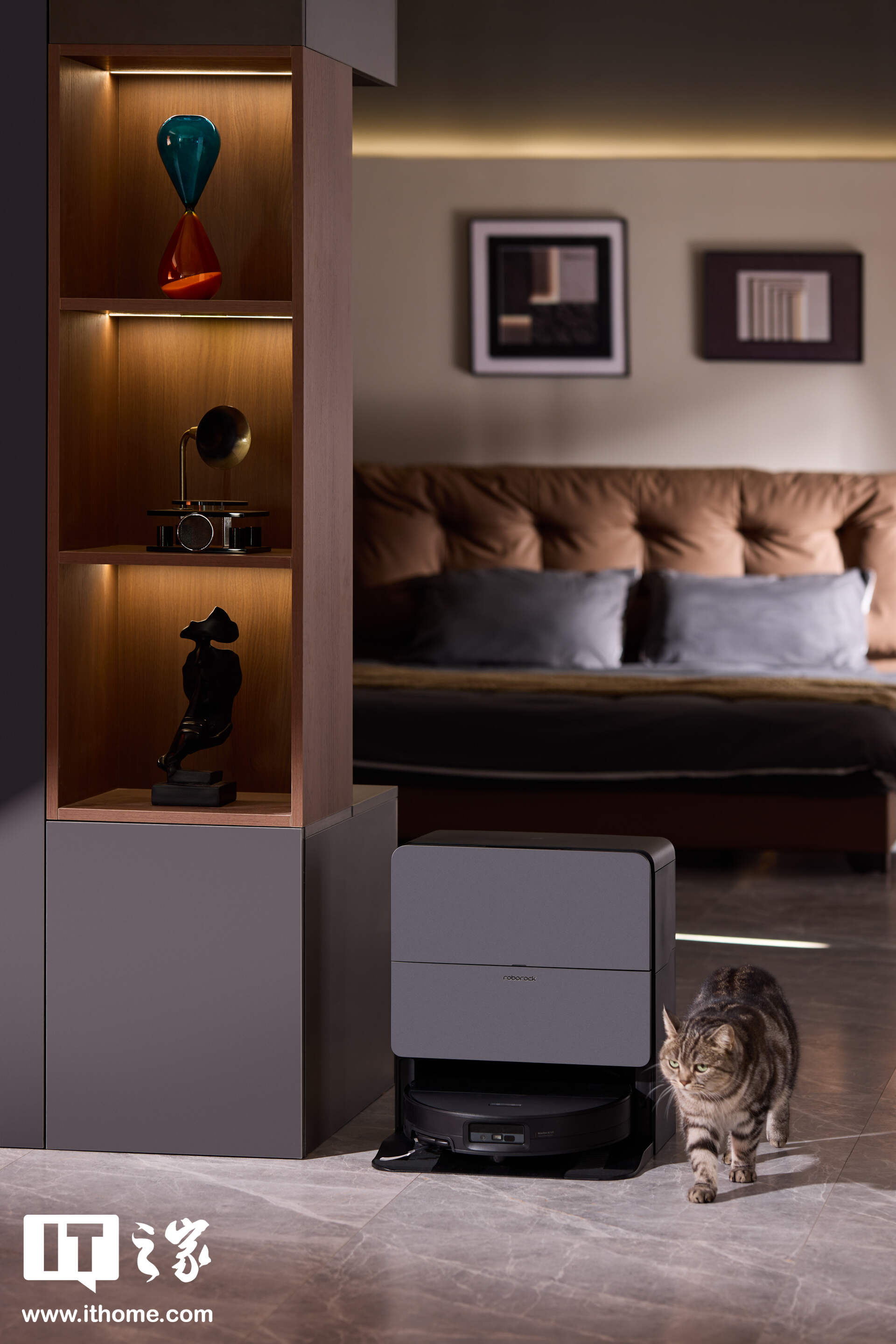
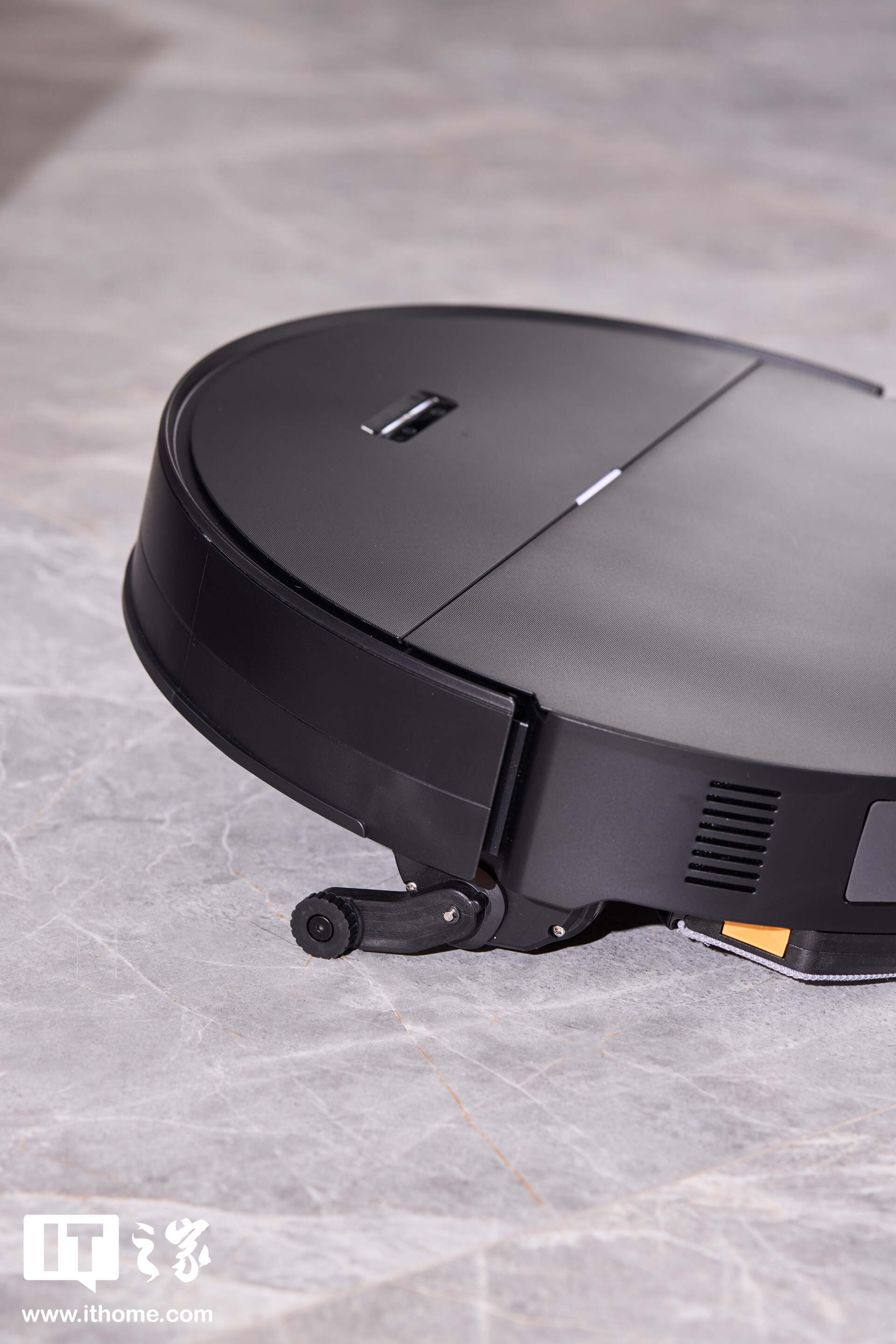
In one sentence: On the morning of Aug 12, Roborock announced its new roller-mop flagship G30S Ultra, on sale Aug 14. It pairs a next-generation high-speed motor with 41,000Pa peak suction aimed squarely at dust and pet hair, and uses a roller-mop structure with the All-Terrain Pressurized Hot-Water Mopping 2.0 system — 75°C hot water and a 16-nozzle pressurized spray for a one-pass “spray, scrub, scrape, collect” clean.
💡 Why it matters: This is the first Roborock G-series model to carry roller-mop technology, a clear signal that Roborock is committing its premium line to the roller direction. The spec sheet — 41,000Pa suction, 75°C hot water, zero pet-hair tangling — targets the real pain points of pet-owning and long-haired households: brushes clogged with hair and cold-water mopping that leaves streaks are the two hardest problems in the industry’s move from “sweeps well” to “mops well.” The launch cadence (announced Aug 10, re-announced Aug 12, on sale Aug 14) shows the price-and-spec race in robot vacuums is still accelerating in H2 2026, and roller mopping is becoming the next arms race after robotic arms and lifting chassis.
Key facts:
- Suction: 41,000Pa peak, next-generation high-speed motor
- Mopping: All-Terrain Pressurized Hot-Water Mopping 2.0, 75°C hot water, 16-nozzle pressurized spray, one-pass “spray-scrub-scrape-collect”
- Anti-tangle: Zero pet-hair tangling
- Positioning: First G-series model with roller-mop tech (roller previously used in P-series, e.g., P20 Ultra)
- On sale: Aug 14, pre-orders open on JD.com
- Context: G30S Pro (Jan 2026) set the flagship bar with 8.8cm obstacle climbing, chassis-lift 3.0 and 35,000Pa suction; G30S Ultra pushes suction to 41,000Pa and switches to roller mopping
📌 Takeaway: Roborock is splitting its premium line into two clear pitches — G30S Pro for obstacle traversal, G30S Ultra for suction and mopping — a disciplined answer to an endless spec war: every generation must answer one concrete pain point. The G30S Ultra’s actual street price and reviews after Aug 14 will determine whether the “41,000Pa + hot water” combo wins consumers, especially head-to-head against flagship models from Dreame and Ecovacs.
3. 📰 Unitree’s Lottery Numbers Drawn: 19,414 Winners, Payment Due Today at ¥75,400 per Lot
In one sentence: On the evening of Aug 11, Unitree published the online lottery results for its STAR Market IPO: 9.707 million shares were allocated online, producing 19,414 lottery numbers at 500 shares per lot; at the ¥150.80 issue price, each winning lot requires payment of ¥75,400. Today (Aug 12) is the payment deadline — investors who fail to pay in full by end of day will be treated as having forfeited their allotment.
📌 In short: 19,414 winning numbers, a 0.0181% allotment ratio, and a ¥75,400-per-lot payment threshold — the demand and the capital bar for the “first humanoid robot stock” are both leaving marks on A-share history.
Key facts:
- Winning numbers: 19,414 (9.707M online shares ÷ 500 shares/lot)
- Payment: ¥75,400 per lot (500 shares × ¥150.80)
- Deadline: End of today (Aug 12); unpaid lots are forfeited and underwritten by the sponsor
- Allotment ratio: 0.01809759% final online ratio (roughly 1.8 in 10,000)
- Strategic placement: Backers include DeepSeek, the Social Security Fund and CNPC
- Listing outlook: After payment is settled, Unitree is expected to list shortly (market expectations point to mid-to-late August)
💡 Context: From the Aug 10 subscription start (online subscription oversubscribed ~8,288x) to the Aug 11 lottery draw and the Aug 12 payment deadline, every step of Unitree’s IPO is resetting attention on the humanoid sector. Once payments settle, the only remaining question is first-day trading — as the A-share market’s “first humanoid robot stock,” Unitree’s listing price will anchor the entire sector’s valuation. For retail investors, today’s payment is the last procedural hurdle; for the industry, it means the complete public-market pricing process for humanoids as an asset class on the A-share market is nearly done.
🔗 MyDrivers (快科技): Unitree lottery numbers drawn — 19,414 in total! Allotment ratio 0.0181% | IT之家: Unitree lottery results announced

4. 🔬 US Team’s Tensegrity Rolling Robot: Still Operational After a 5.7m Drop, a New Durability Record
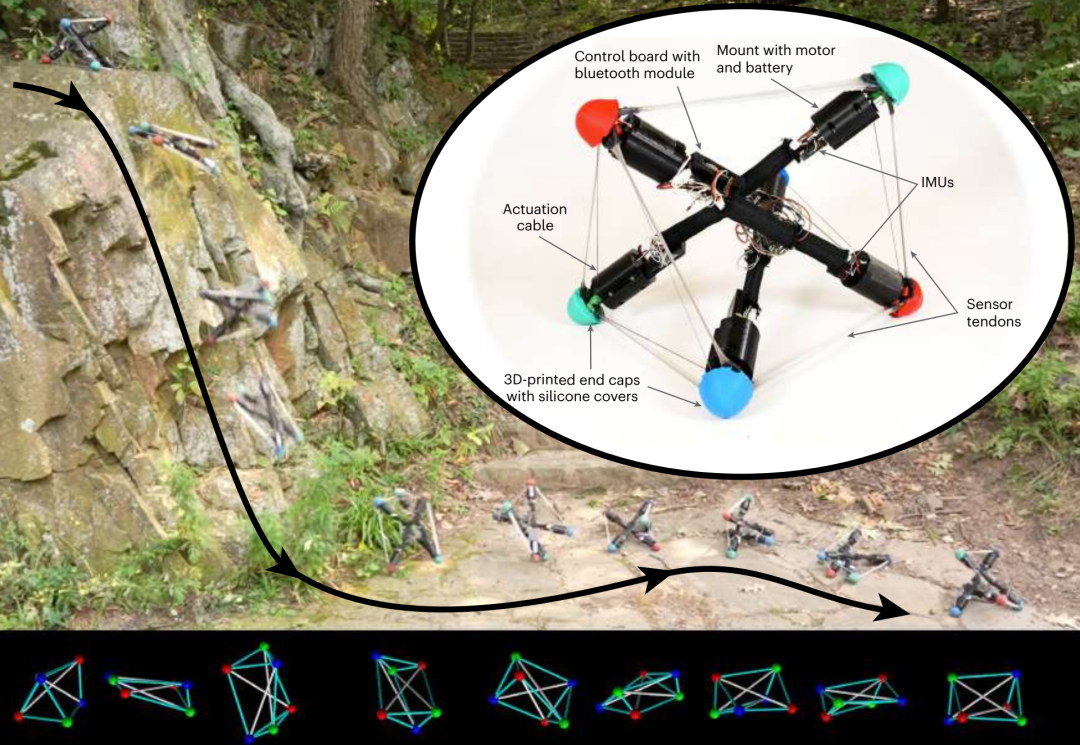
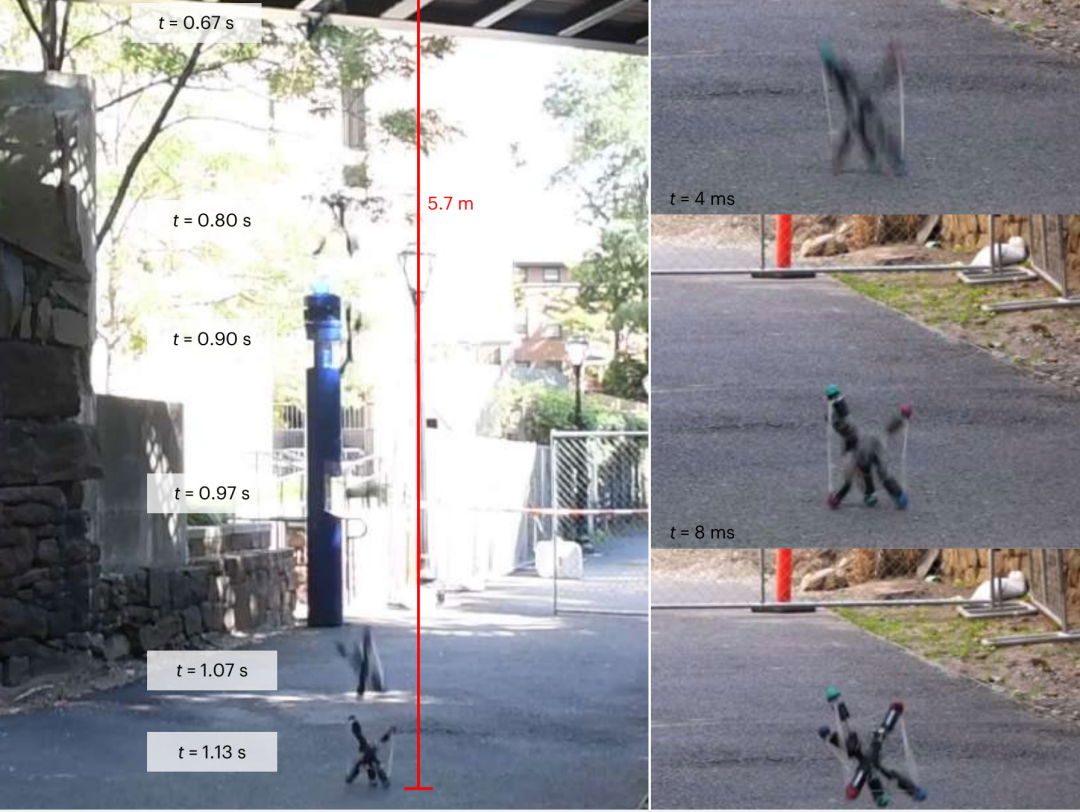
In one sentence: A US research team published a paper in Nature Machine Intelligence showing a rolling robot built on a tensegrity structure — a hybrid of compression struts and tension cables: after a 5.7m (roughly two-story) drop test, the robot remained operational, setting a new durability record for this class of robot.
💡 Why it matters: Tensegrity structures are inherently shock-absorbing — the robot is its own spring. The payoff would come in planetary exploration and disaster rescue: where wheeled or legged robots are prone to tip over and break on rough terrain, a tensegrity robot can be dropped straight from a spacecraft or drone — the fall is the landing, and rolling is the locomotion. As a research direction, this “softness over rigidity” approach offers a design philosophy completely different from the rigid-joint route that dominates humanoids today.
Key facts:
- Source: Paper published in Nature Machine Intelligence (online mid-August)
- Core structure: Tensegrity (compression struts + tension cables)
- Durability record: Still operational after a 5.7m (two-story) drop test — a record for this class
- Locomotion: Rolls via structural deformation / center-of-mass shifts — no conventional wheels or legs
- Applications: Planetary exploration (deployed by dropping from orbiters/drones), disaster rescue (rubble environments), rugged-terrain inspection
📌 Takeaway: While the world races on “dexterous hands + two legs,” tensegrity robots are a reminder that the answer to robot morphology is not singular. For certain missions, an unbreakable rolling structure may be more practical than a delicate biped. These designs are far from commercialization, but the shock-resistant philosophy is already influencing other fields — including joint cushioning and fall-protection design in humanoids.
🔗 MyDrivers (快科技): US rolling robot sets record — still works after falling from 5.7 meters
5. 🏭 Jiangxing Intelligent Launches “One Brain, Many Bodies” for Industrial Embodied AI: One Controller Directs Multiple Robots Toward Autonomous Decision-Making
In one sentence: Jiangxing Intelligent has released an industrial embodied-intelligence solution called “One Brain, Many Bodies”: a single embodied-AI controller serves as the “brain,” dynamically directing multiple robot bodies — quadruped robots, wheeled robots and others — to autonomously make decisions for inspection and operation tasks in substations, chemical plants and similar industrial settings, moving industrial robots from single-machine automation to group intelligence.
💡 Why it matters: The dominant industrial-robot paradigm so far has been “one machine, one brain” — every robot carries its own compute and control logic, which is costly and hard to coordinate. “One Brain, Many Bodies” centralizes perception, decision-making and planning in a single cloud/edge controller, letting heterogeneous robots share one brain and be dispatched by task. This aligns with the VLA (vision-language-action) trend in embodied AI: the more general the brain, the cheaper the body. For domestic industrial settings — substations, power-line inspection, hazardous chemical parks — multi-robot autonomous coordination is the next wave after single-unit inspection robots.
Key facts:
- Solution: “One Brain, Many Bodies” industrial embodied-intelligence scheme
- Components: Embodied-AI controller (the brain) + quadruped/wheeled and other robot bodies (the bodies)
- Target scenes: Substations, chemical plants, hazardous-chemical parks — inspection and operations
- Technical route: Multiple bodies share one brain; task-level autonomous decision-making and dynamic dispatch
- Industry context: Consistent with the VLA embodied-AI trend; industrial settings are seen as one of the earliest markets for embodied AI at scale
📌 Takeaway: Industrial settings are the highest-certainty battleground for embodied-AI commercialization, and “One Brain, Many Bodies” speaks directly to industrial customers’ core demand — fewer expensive “brains,” more attachable “bodies.” Whether it works hinges on controller reliability in real industrial environments, compatibility with existing systems, and above all: proving it saves money and is safer than one-brain-per-machine. Watch for the solution’s flagship deployments in H2.
🔍 Today’s Watchlist
Robot technology is moving in two directions at once: scaling up (humanoids chasing volume) and spreading down (actuator tech flowing into phones and home appliances). Honor puts a 4DoF gimbal inside a phone; Roborock turns 41,000Pa suction and 75°C hot water into a vacuum flagship; Unitree’s lottery is drawn and its listing enters the final countdown; and the tensegrity robot reminds academia that morphology is still an open question. Tonight’s 19:00 Honor Robot Phone event deserves full attention — if price and capacity deliver, the consumer-electronics narrative for the robot supply chain officially begins. Tomorrow’s watchlist: Unitree’s listing progress, post-launch pricing and order feedback for the Robot Phone, and G30S Ultra pre-sale numbers.
Sources: MyDrivers (快科技) | IT之家 | Roborock official Weibo | Unitree Technology announcement | Nature Machine Intelligence | Jiangxing Intelligent